Winchester Cathedral

Winchester Cathedral

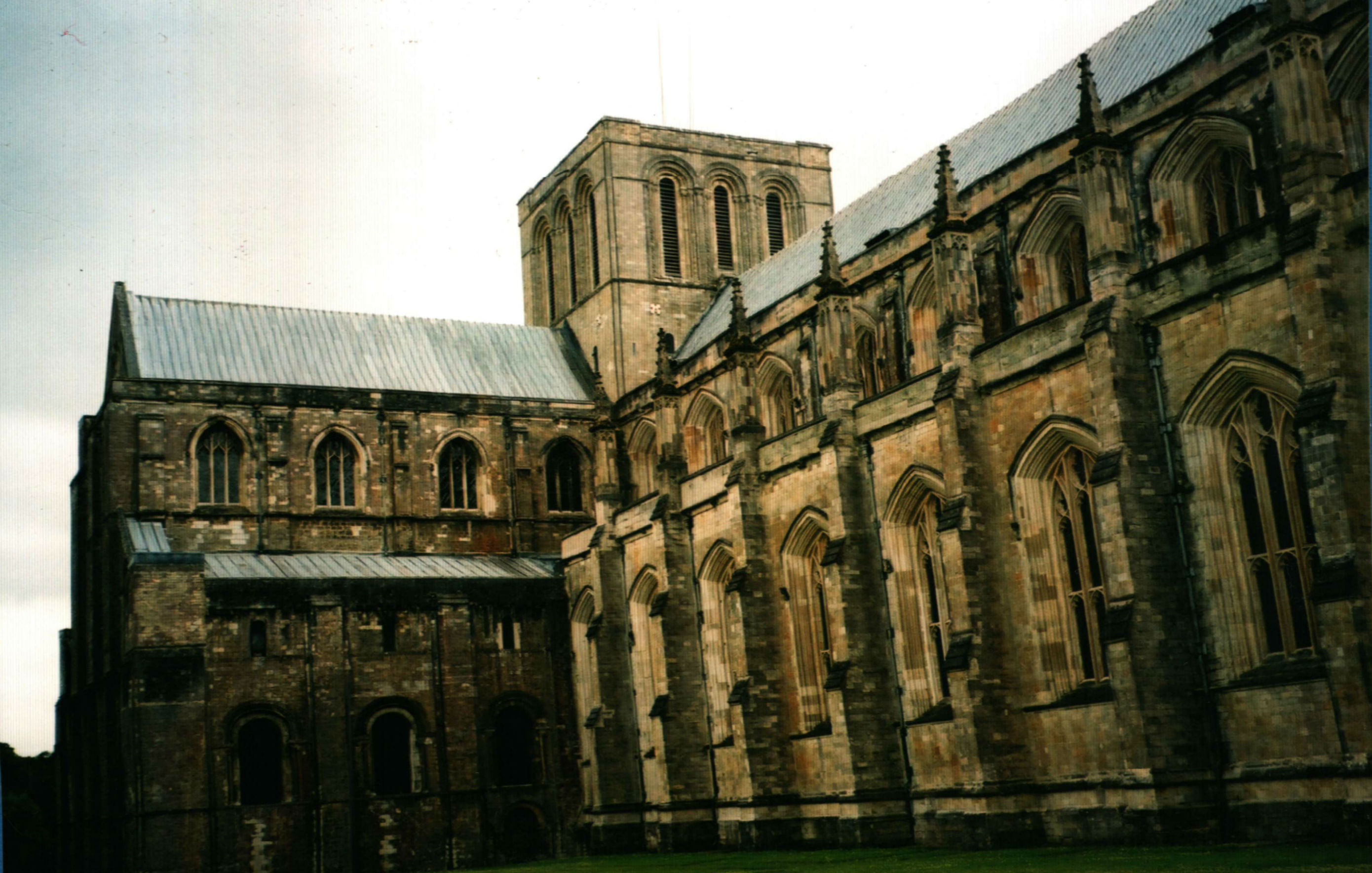
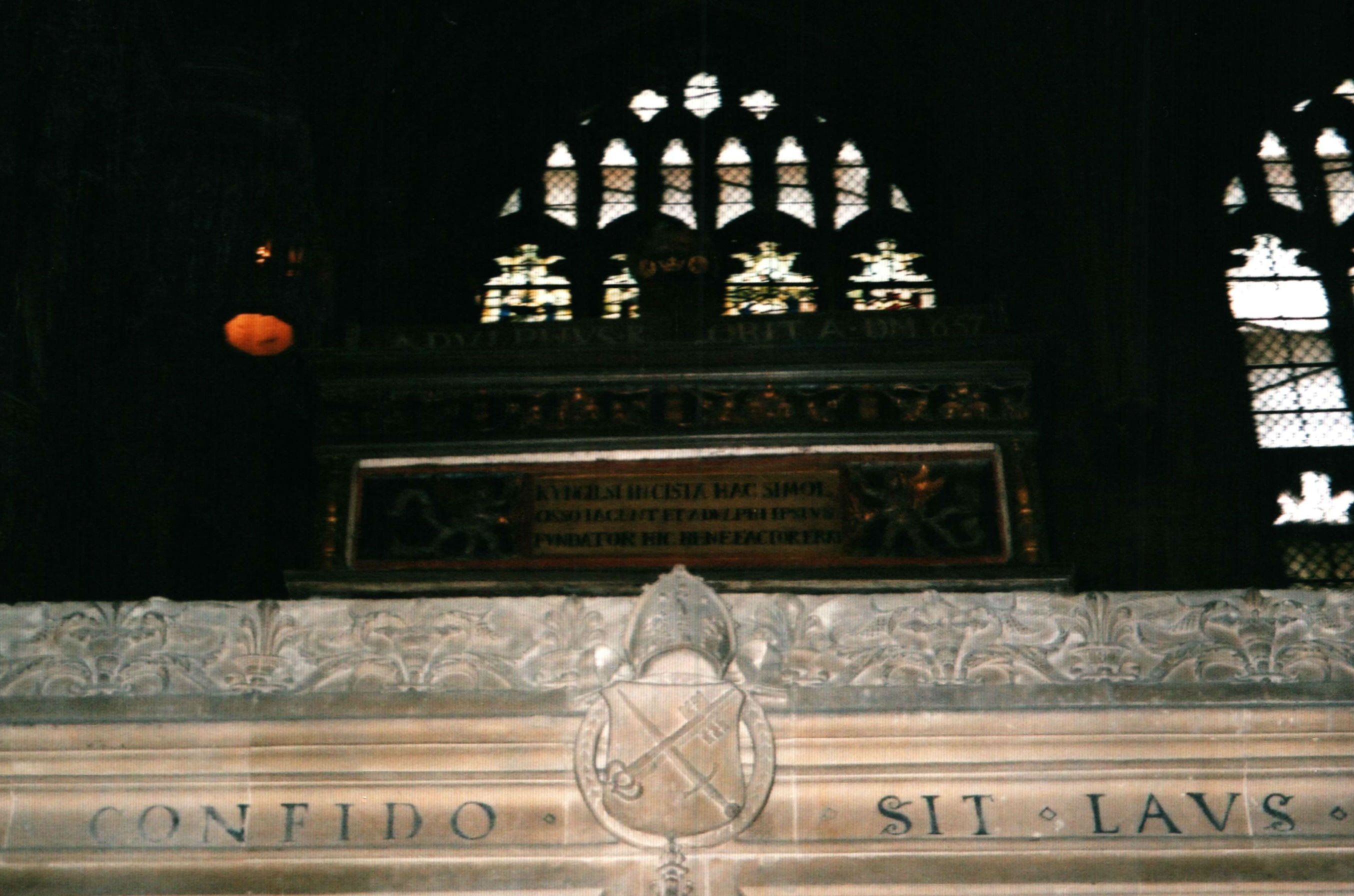
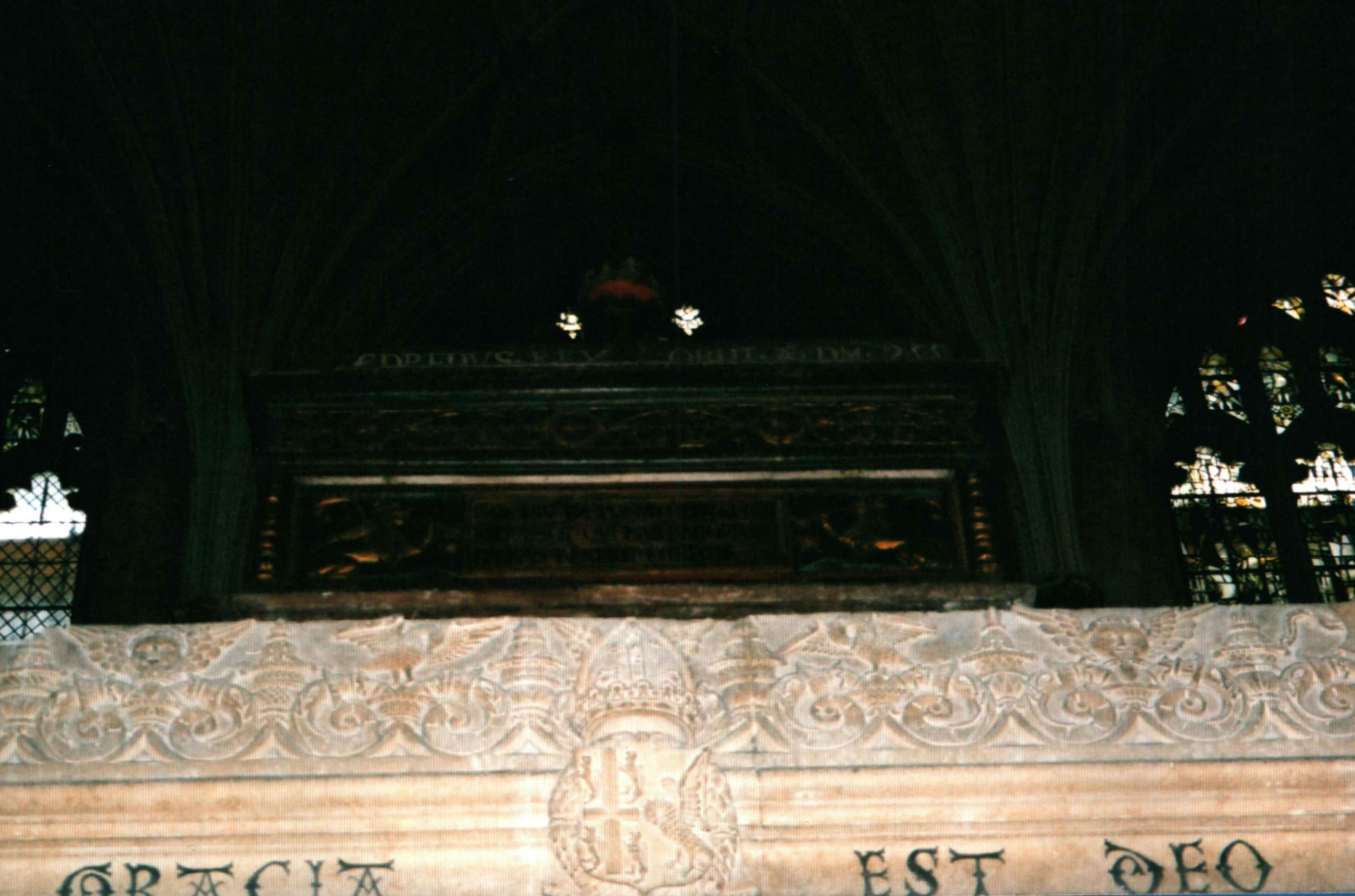
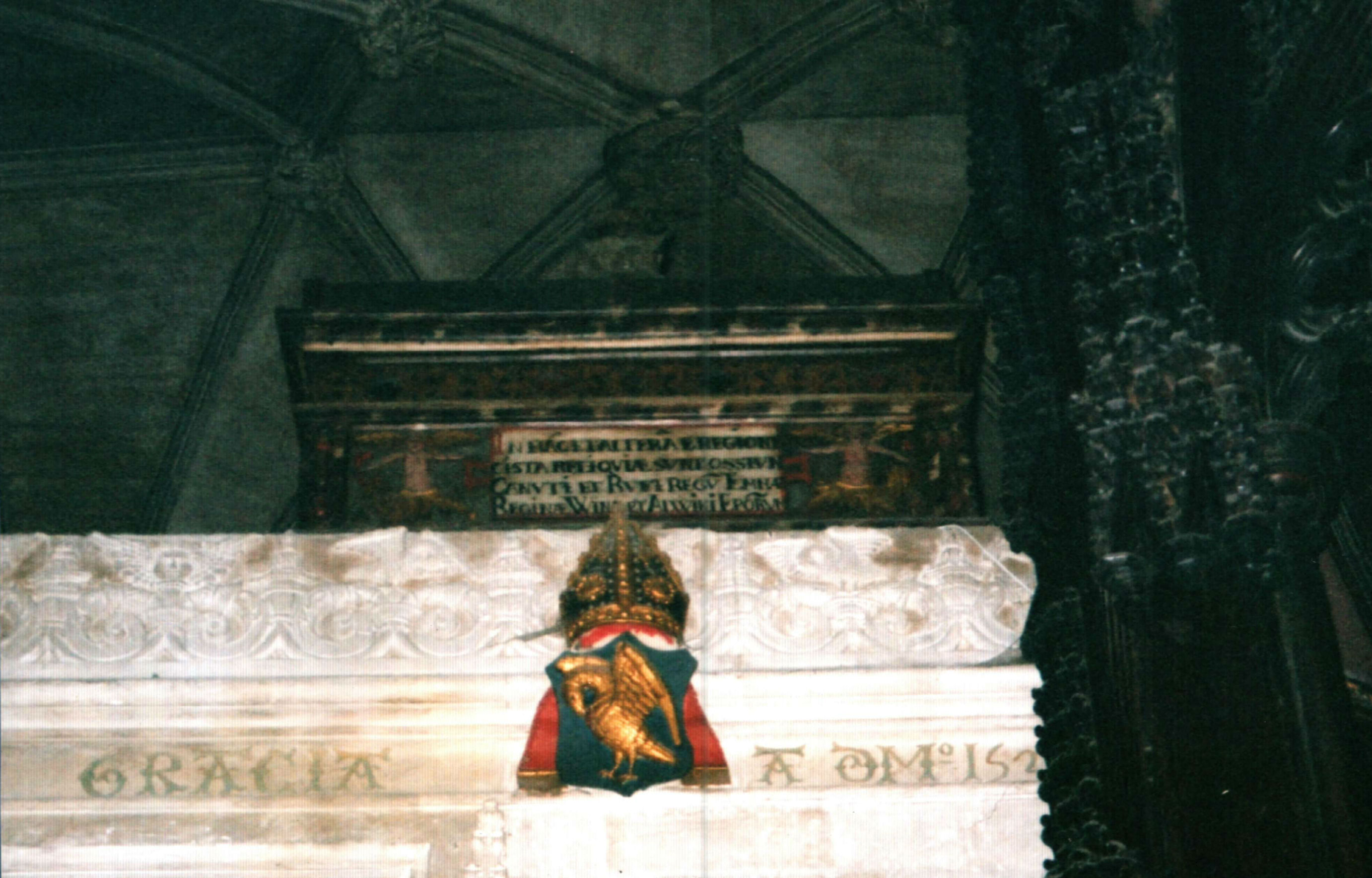
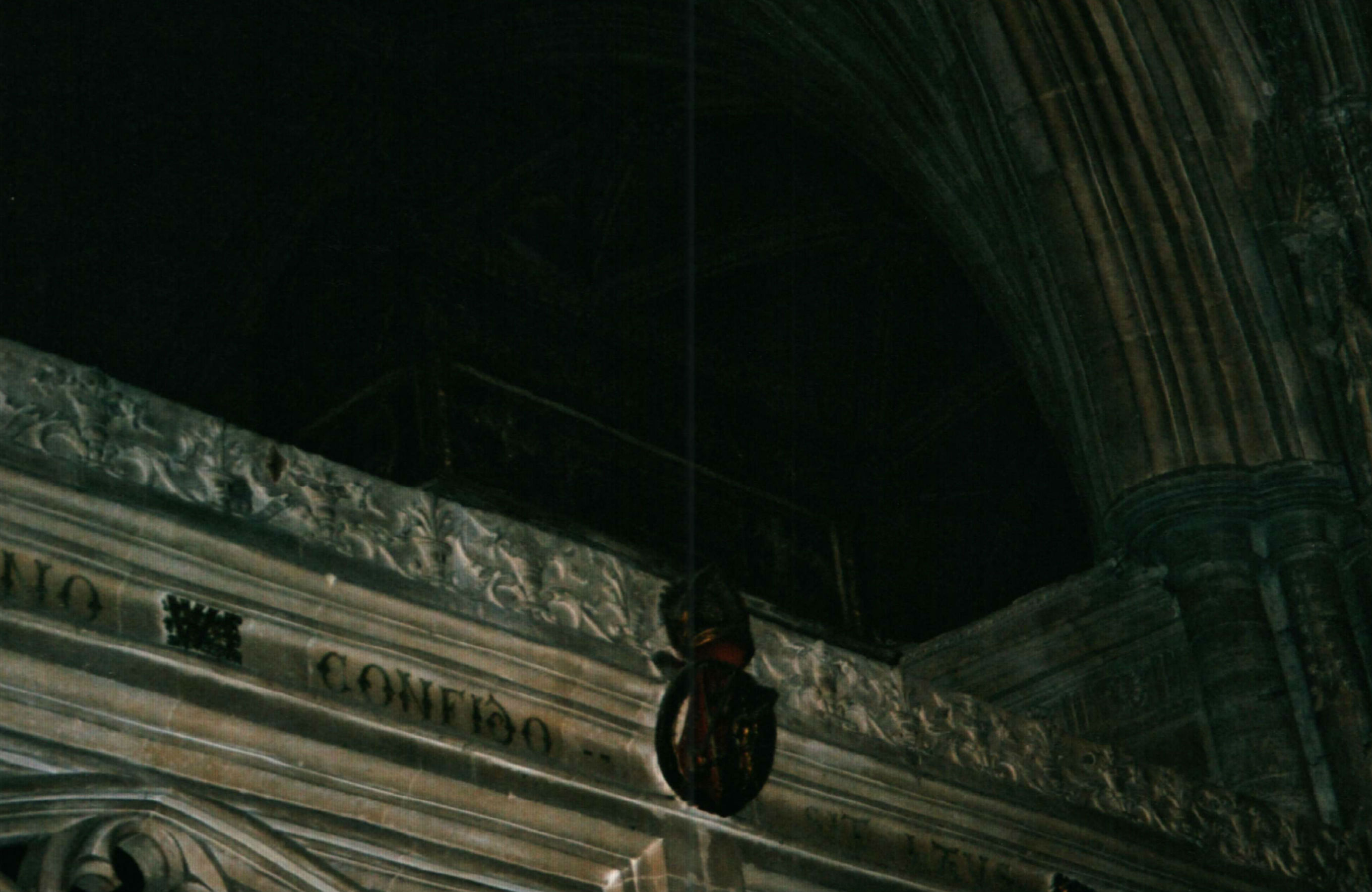
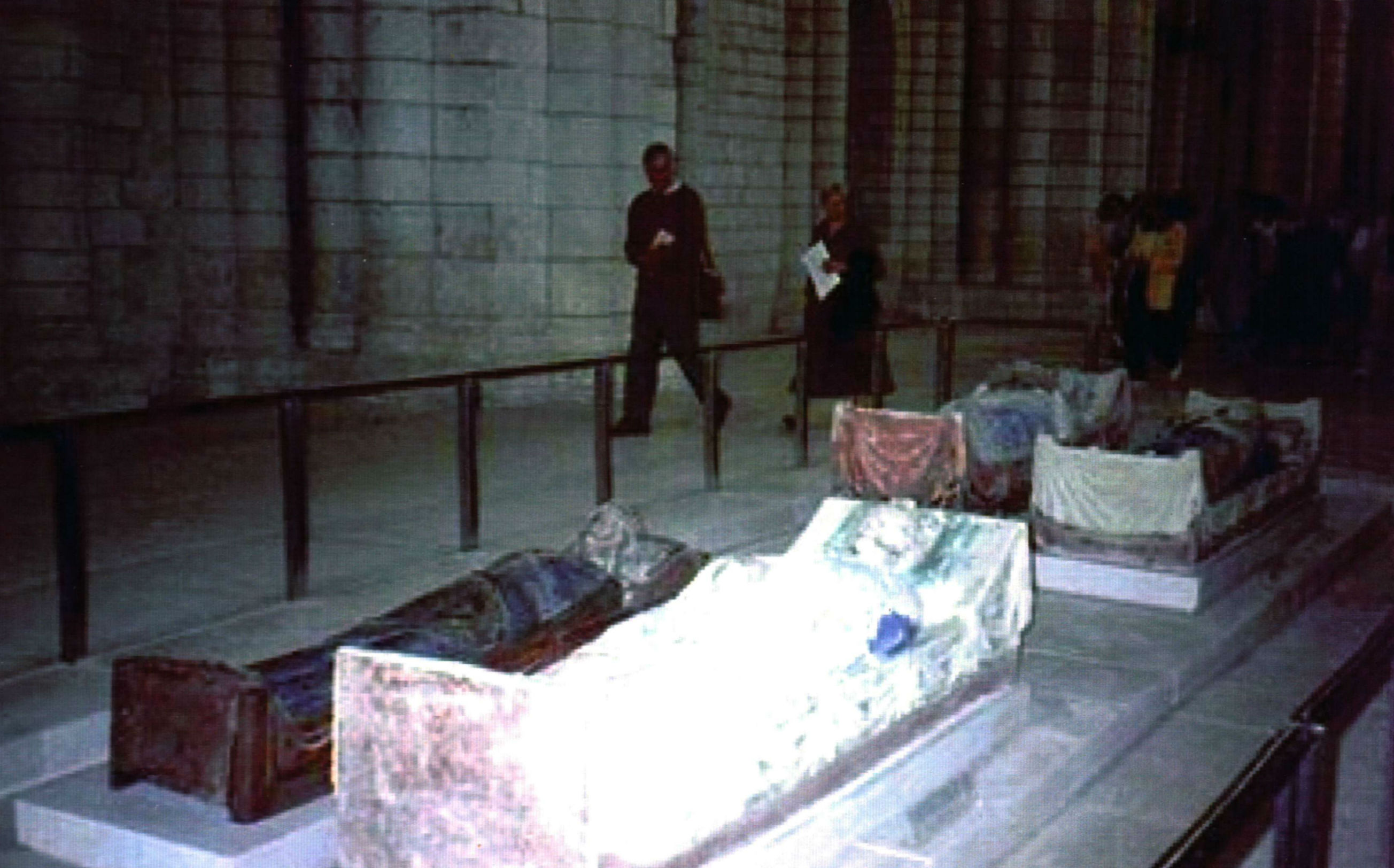
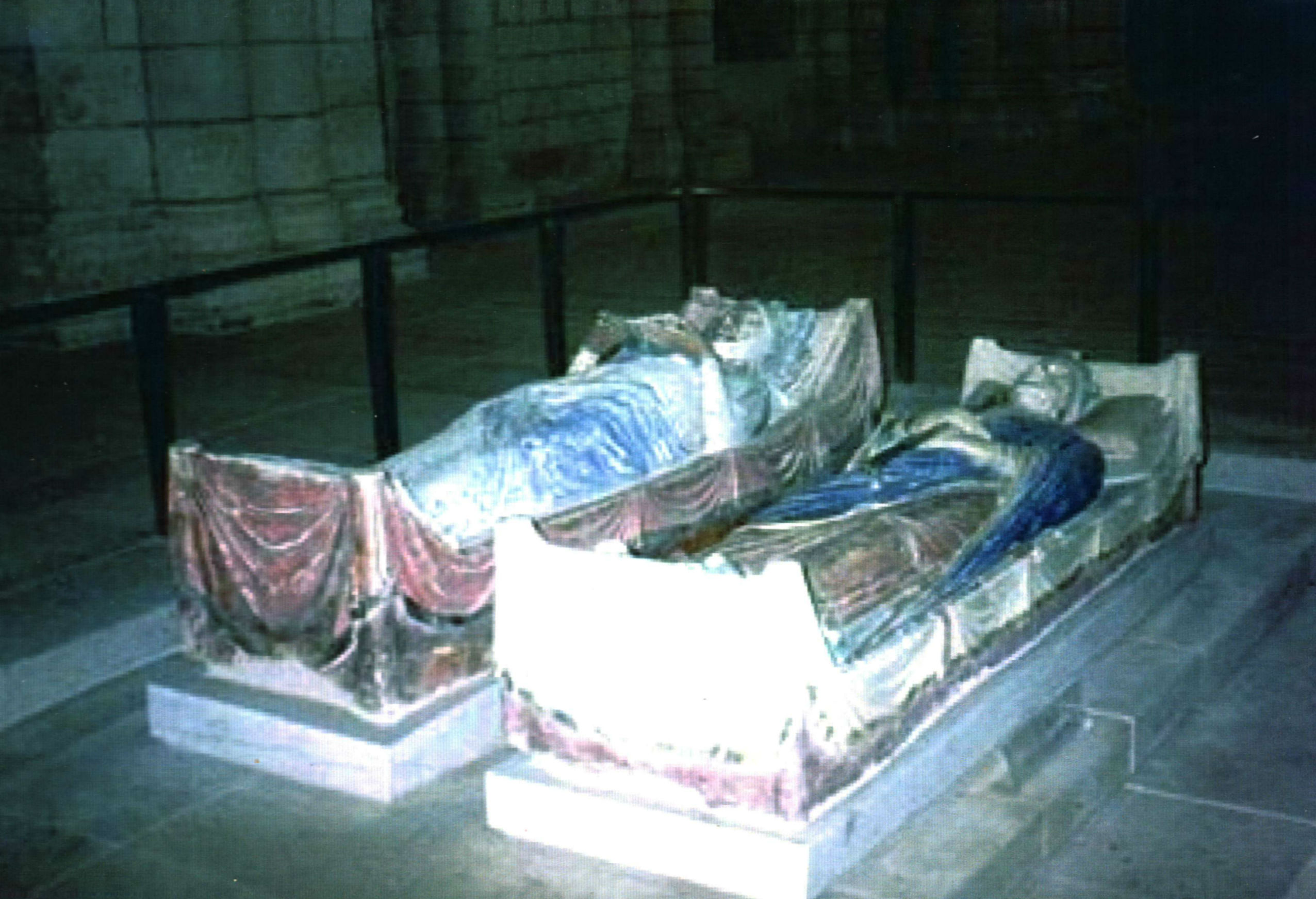
Nine English Kings (excluding Alfred) are buried in Winchester Cathedral, pictured above and through this link.

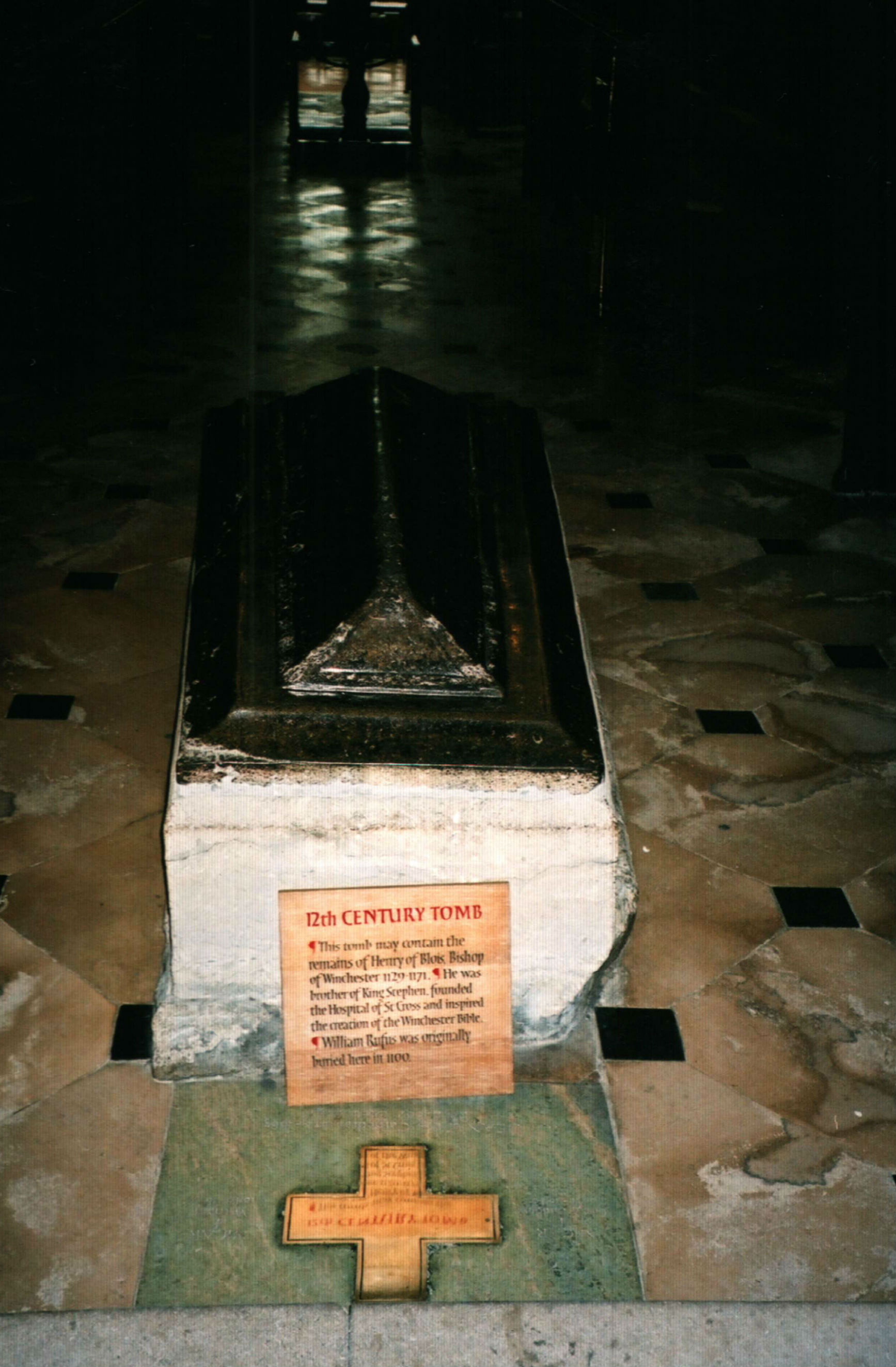
Below left: the site of the shrine of St Swithun. Below right: the original tomb of King William ii (Rufus) 1087-1100, whose remains were scattered over five hundred years later by the Parliamentarian soldiers during the Civil War. However, according to the plaque, William Rufus had been moved from that site to allow the burial of Henry of Blois, Bishop of Winchester in 1171.

Shrine of St Swithin     King William Tomb

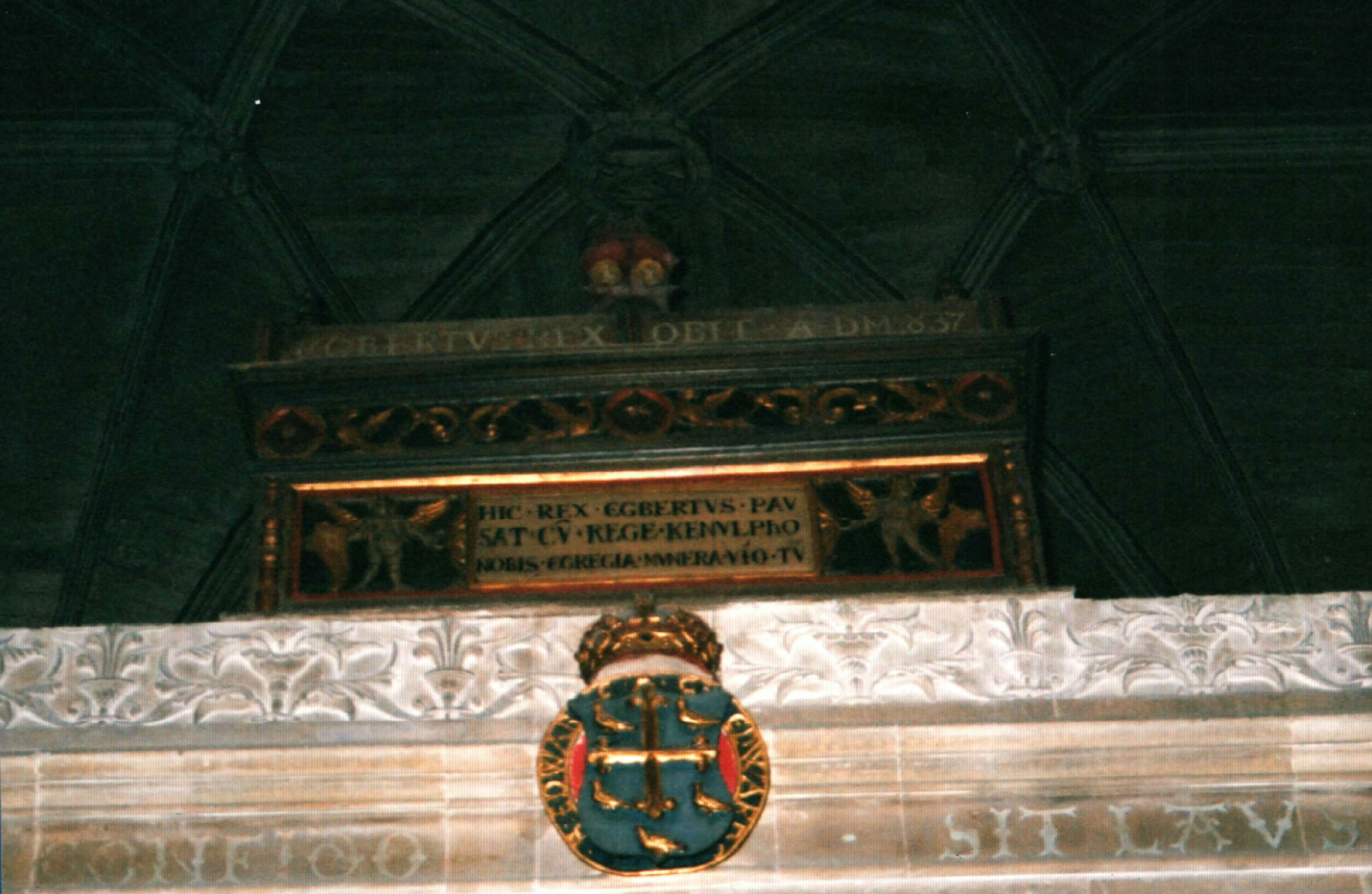
The Mortuary Chests

During the Civil War of the 17th century, Parliamentarian soldiers threw the original chests down to the ground and broke them open. The bones were then used to smash the windows in the Cathedral. At the restoration of the monarchy in 1660, the scattered and mixed up bones were placed in the present mortuary chests (shown below).

They include: Cynegil 611-642; Cenwealh 642-672; Egbert 802-839; Aethelwulf 839-858; Edward The Elder 899-924; Eadred 946-955; Eadwig 955-959; Canute 1017-1035; Hardicanute 1040-1042; William ii (Rufus) 1087-1100.

Mortuary Chest 1     Mortuary Chest 2

Mortuary Chest 3     Mortuary Chest 4

Mortuary Chest 5     Mortuary Chest 6

Posted in Kings & Queens of England | Tagged , , , | Leave a comment

Winchester – King Alfred the Great

King Alfred the Great  King Alfred the Great

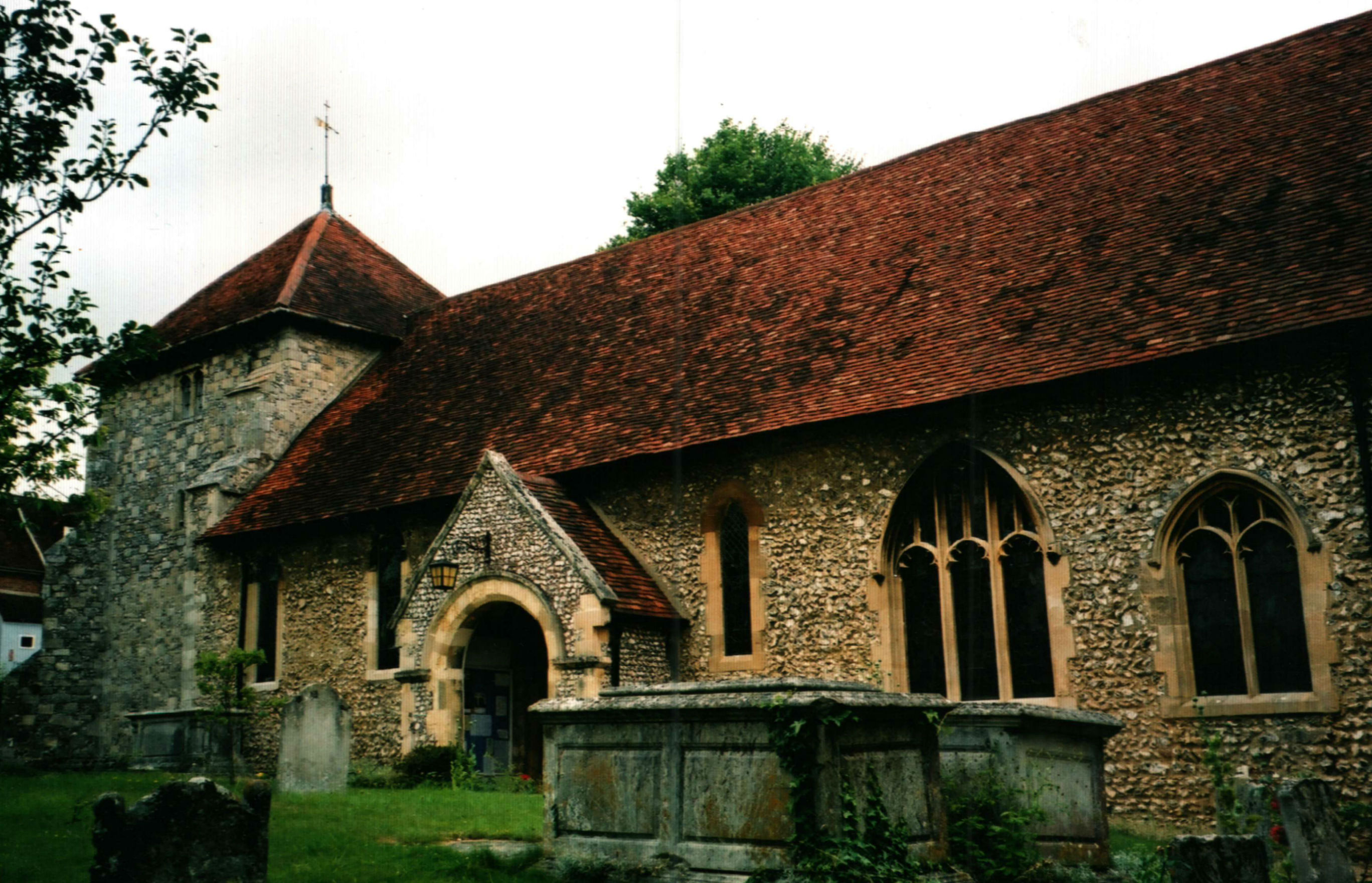
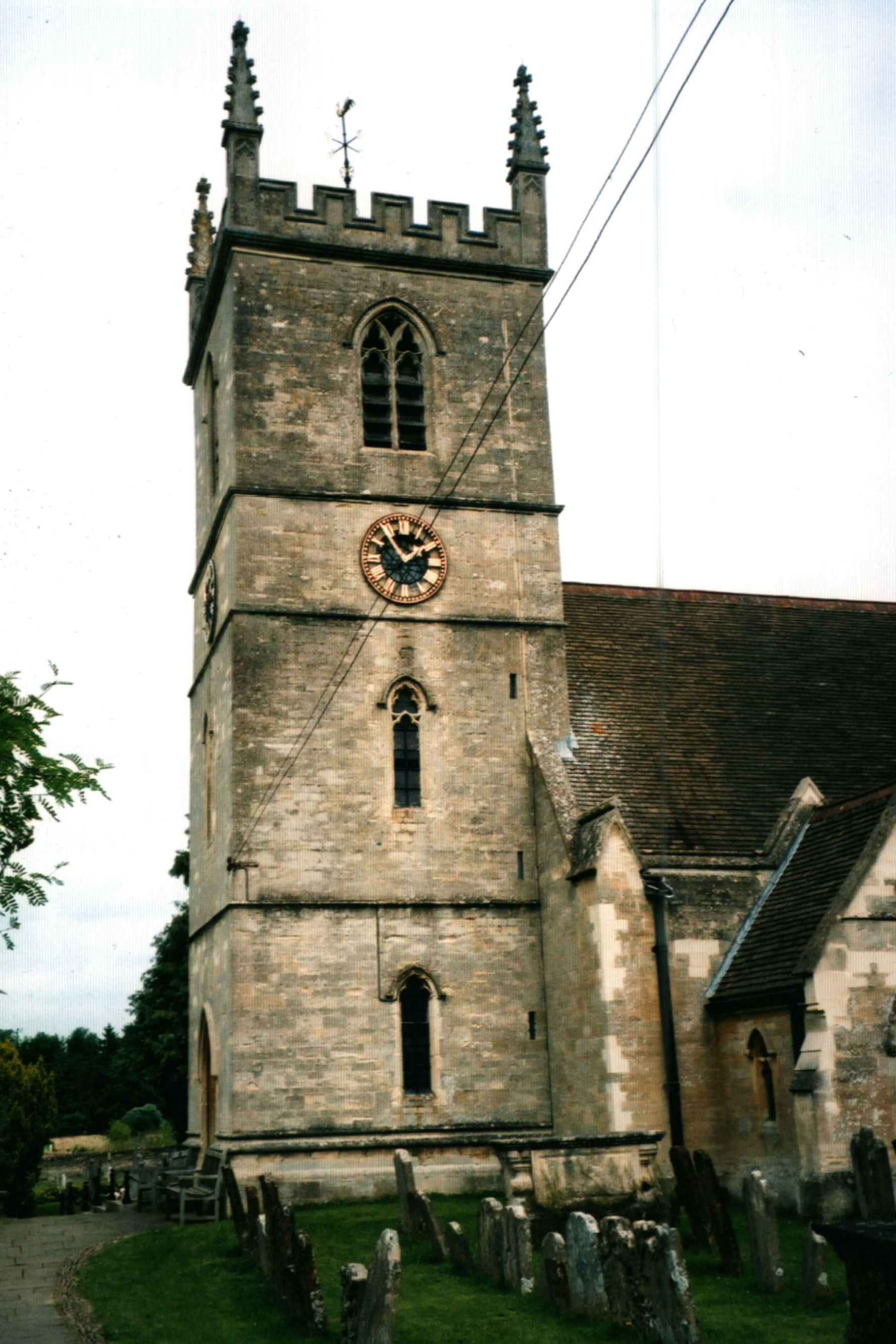
Below: after several moves (the technical expression is ‘translation[s]) is the last resting place of King Alfred the Great at the east end in the churchyard of St Bartholomew’s Church, Winchester. Although his ‘whereabouts’ is well documented, a series of events now indicate that the content of this particular grave is dubious.

King Alfred St Bartholomews     St Bartholomews

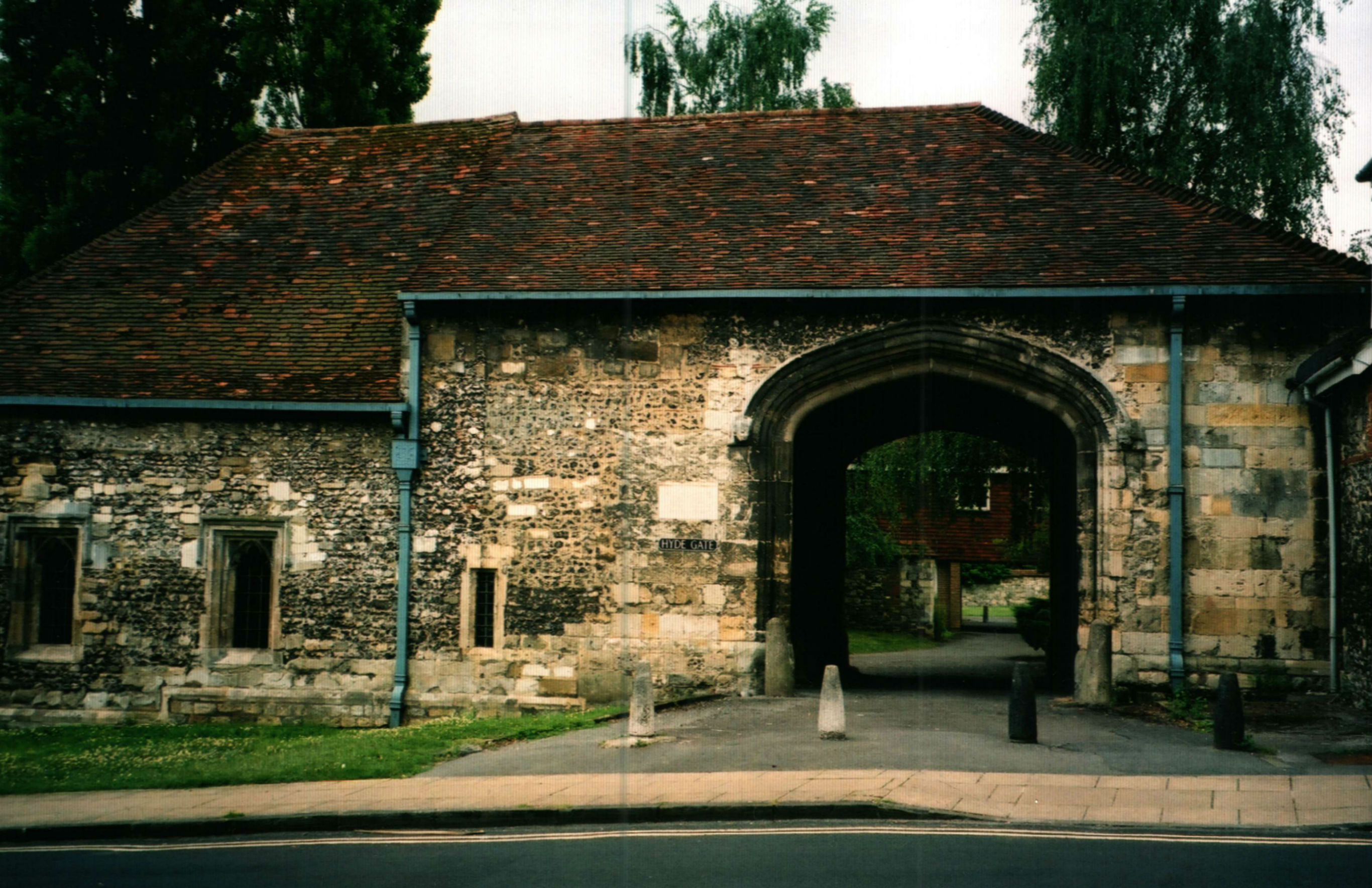
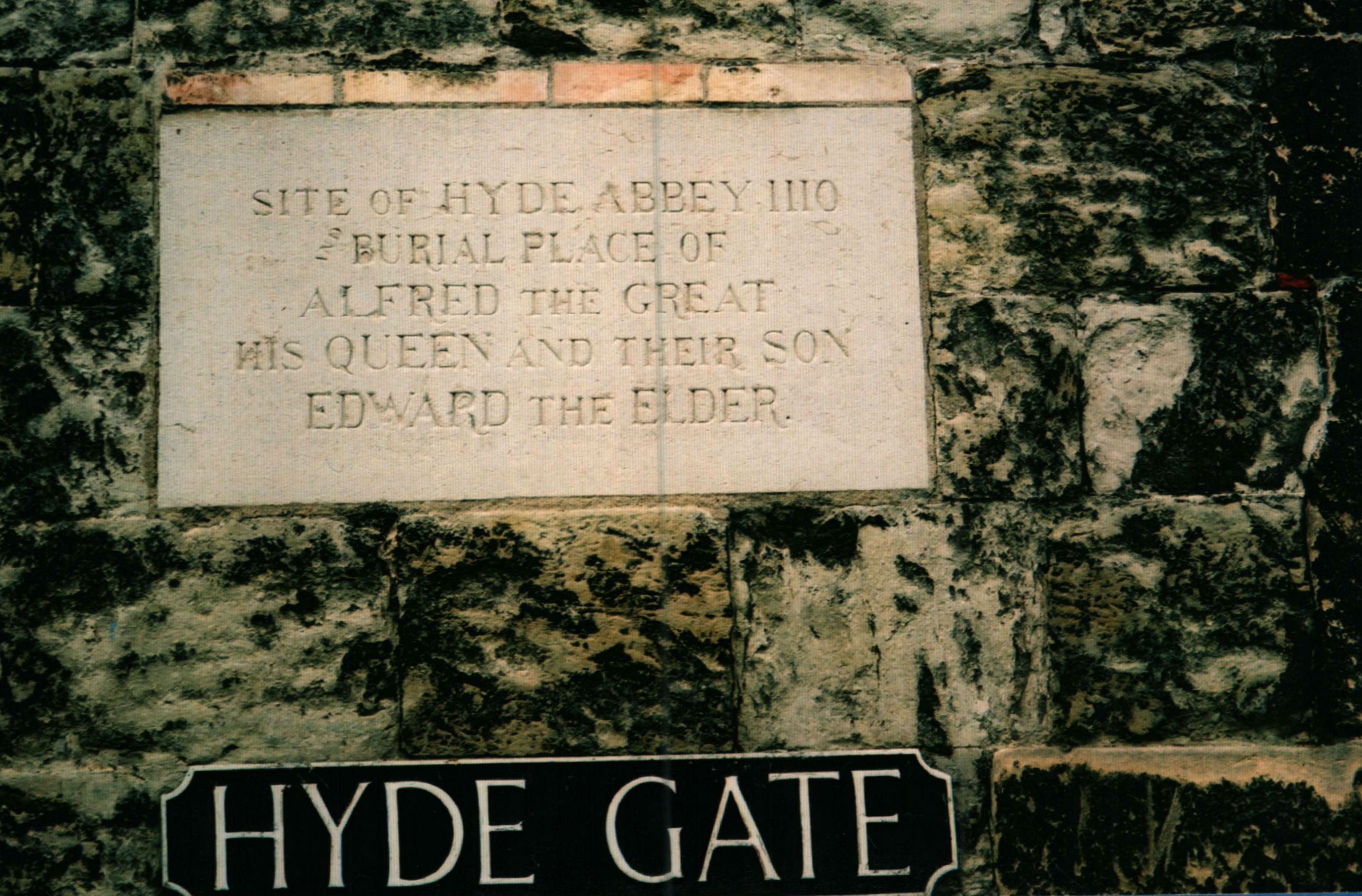
Below left: all that remains of the great abbey of Hyde, and right: a close up of the plaque to the left of the arch.

Hyde Abbey     Hyde Abbey Plaque

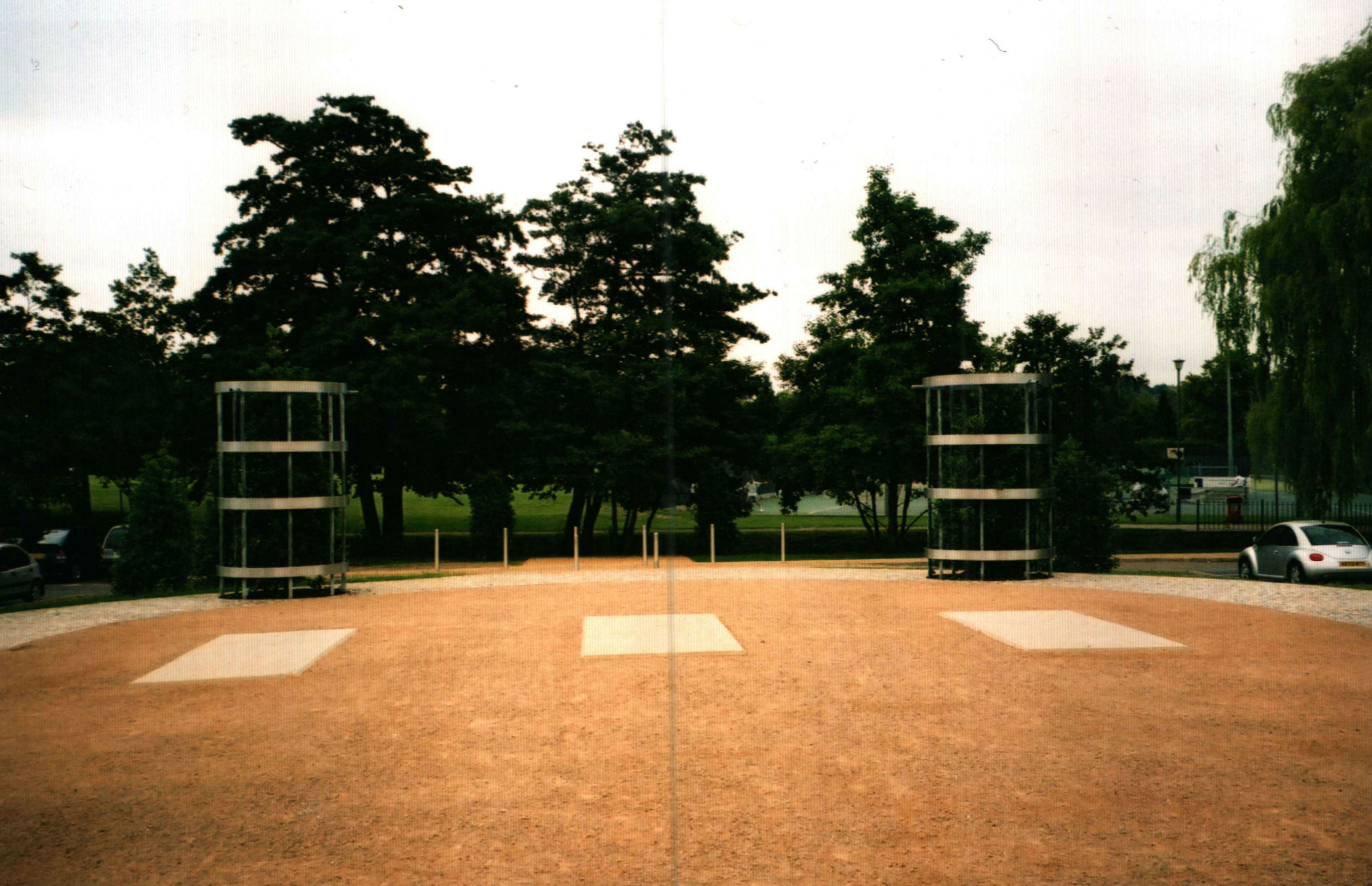
Following the excavation of the east end and the apse of Hyde Abbey earlier in 2003, the three commemorative stones (shown below) were placed over the sites of King Alfred’s original tomb and those of his wife and son.

Hyde Abbey East End

Posted in Wessex | Tagged , , , , | Leave a comment

Blaydon

Blaydon Church     Churchill Family Graves

Above left: the village church at Blaydon.  Above right: the site of Winston Churchill’s family’s graves.

Below: the grave of Winston Churchill and his wife, Clementine. The inscription reads:       “Winston Leonard Spencer Churchill 1874-1965                                                                Clementine Ogilvy Spencer Churchill 1885-1977”

Sir Winston Churchill Grave


Posted in Uncategorized | Tagged , | Leave a comment

Reading Abbey

Henry i (Beauclerc)          1100-1135

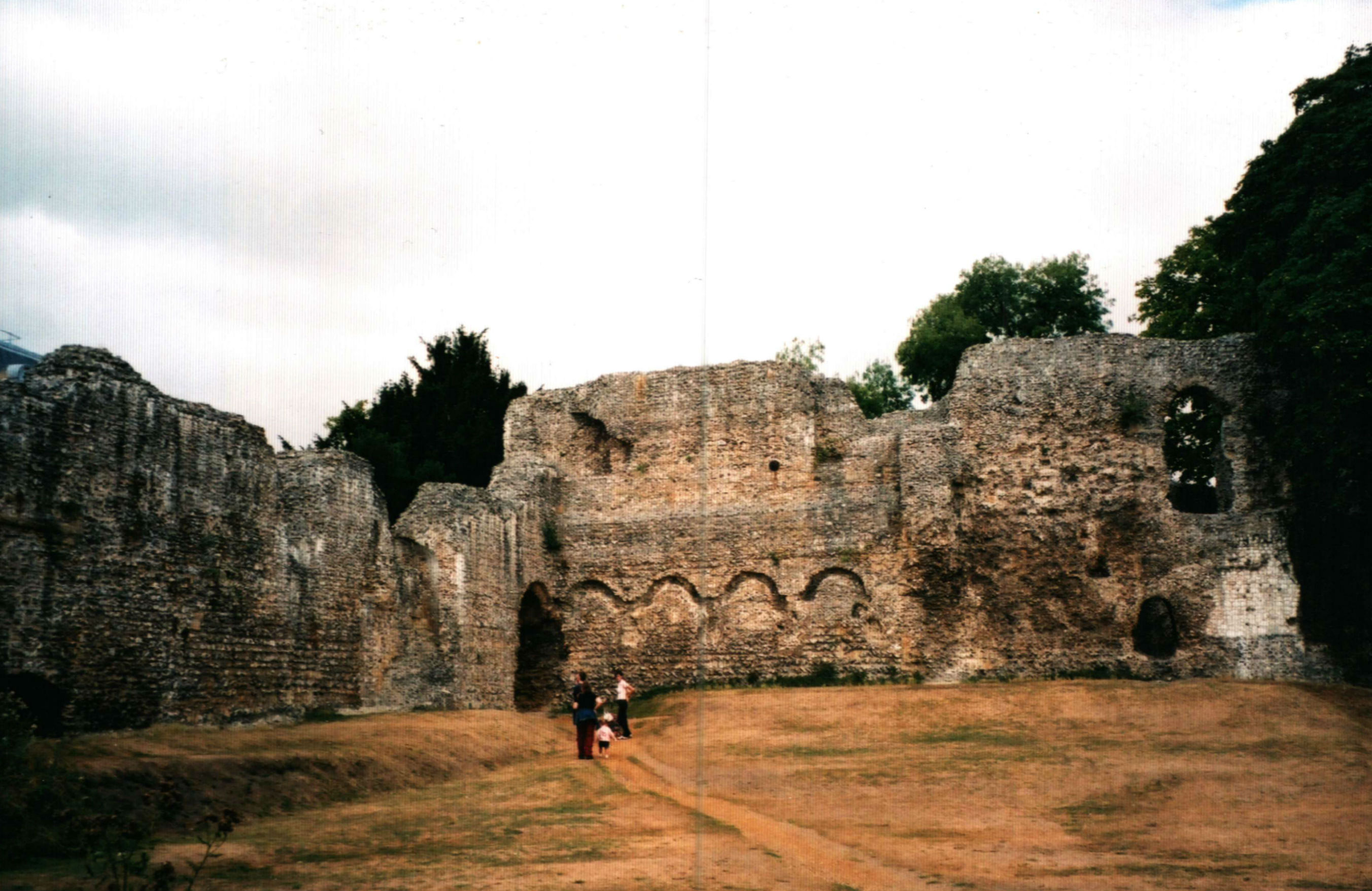
Reading Abbey     Reading Abbey 2

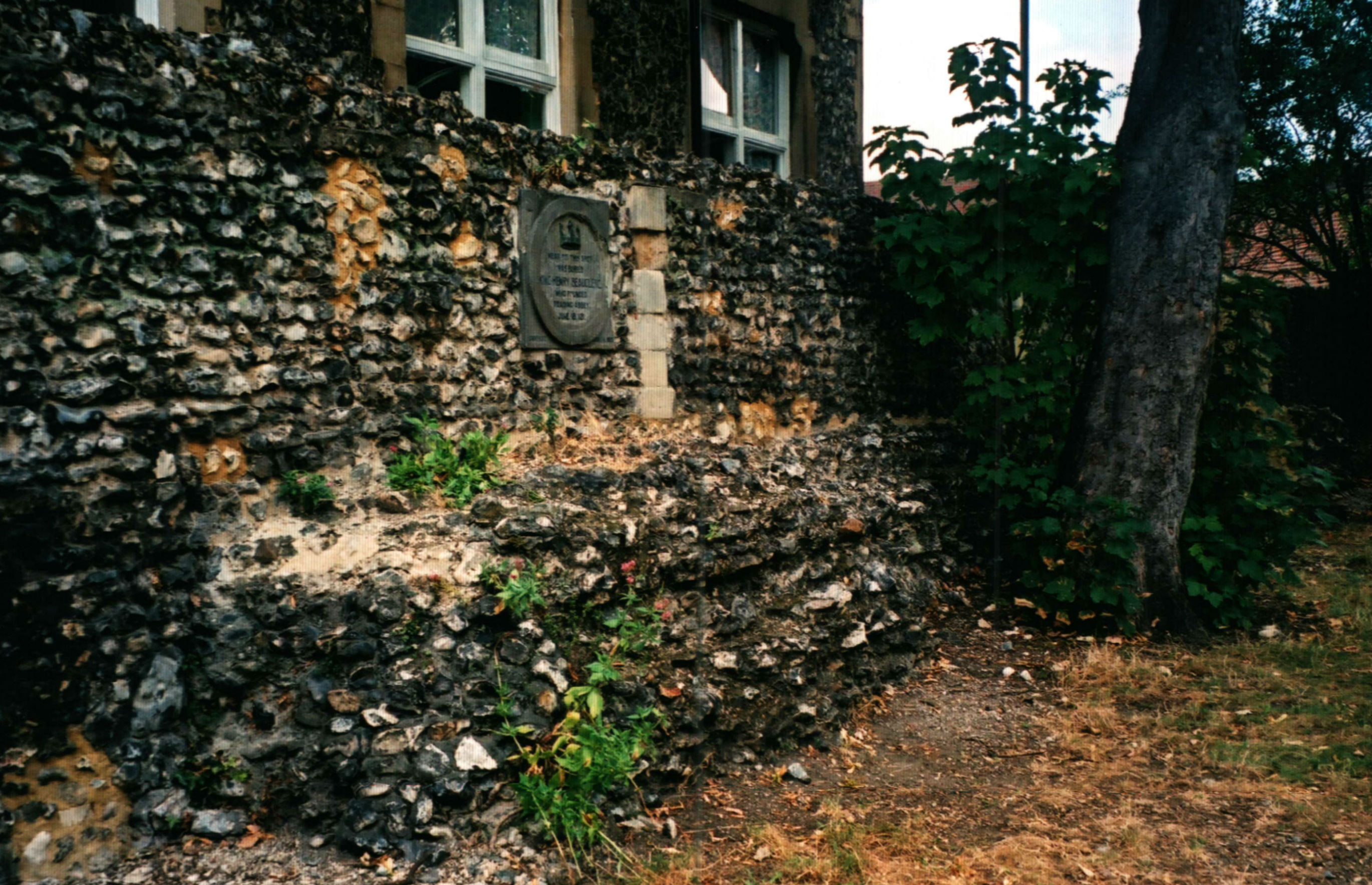
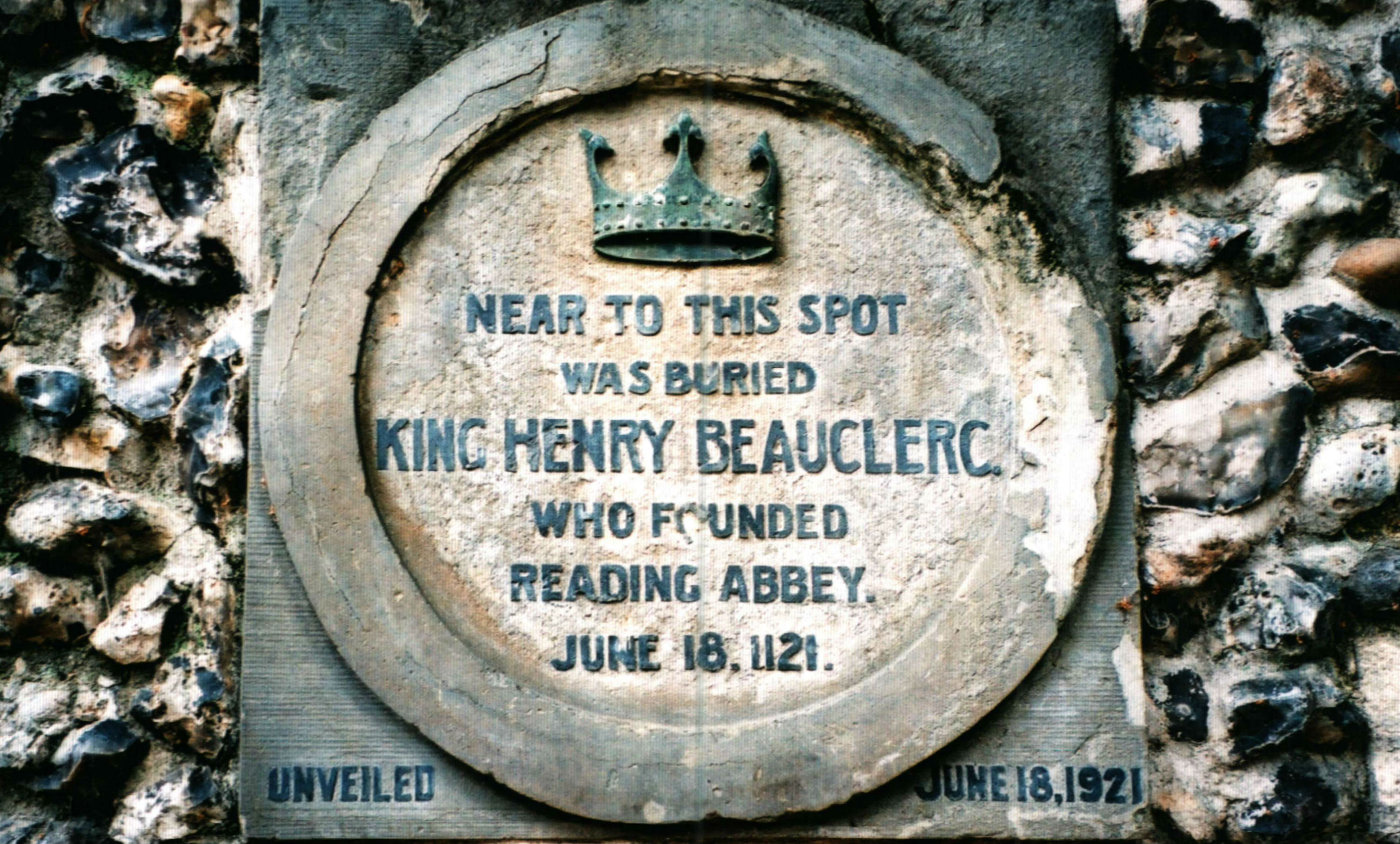
Above and below: views of the ruins of Reading Abbey where King Henry i (Beauclerc) is buried.

Reading Abbey King Henry     Reading Abbey King Henry Plaque

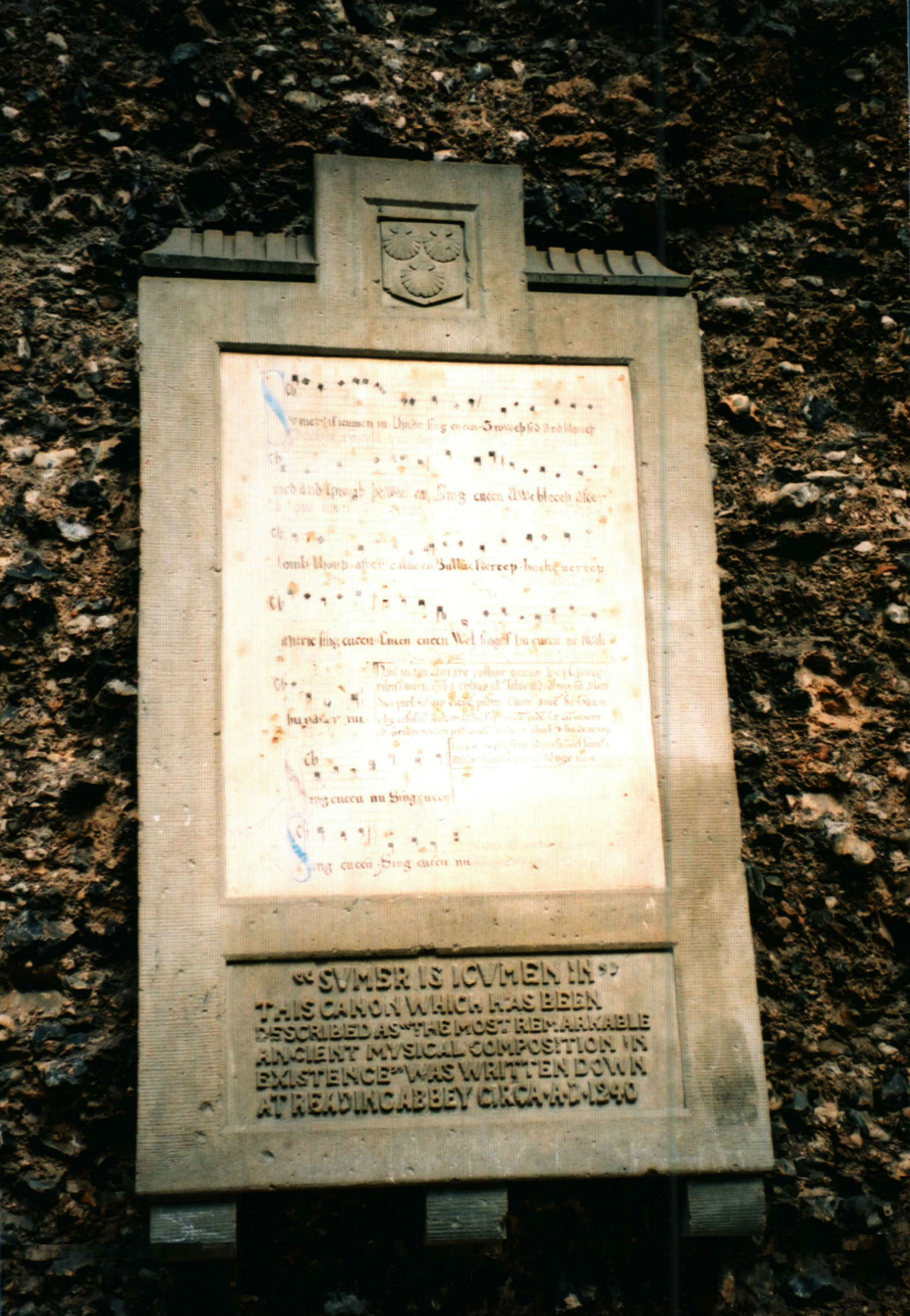
The plaque below records that the melody of the folk song ‘Sumer is Icumen in’ described as the most remarkable ancient musical composition in existence’, was written down at the Abbey in 1240.

Reading Abbey Sumer

Posted in House of Normany | Tagged , | Leave a comment

Waltham Abbey

Harold ii          Jan-Oct 1066

Waltham Abbey

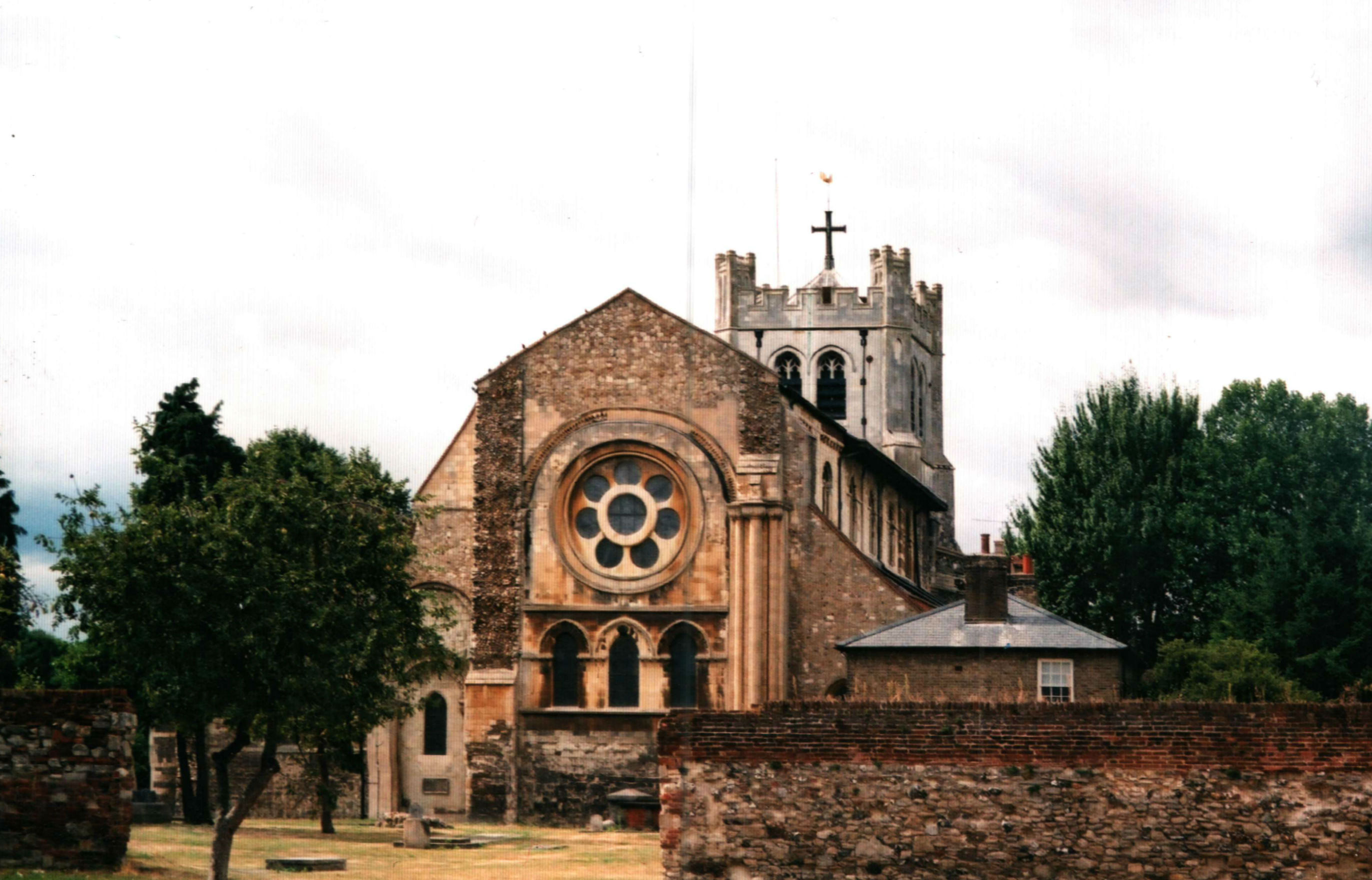
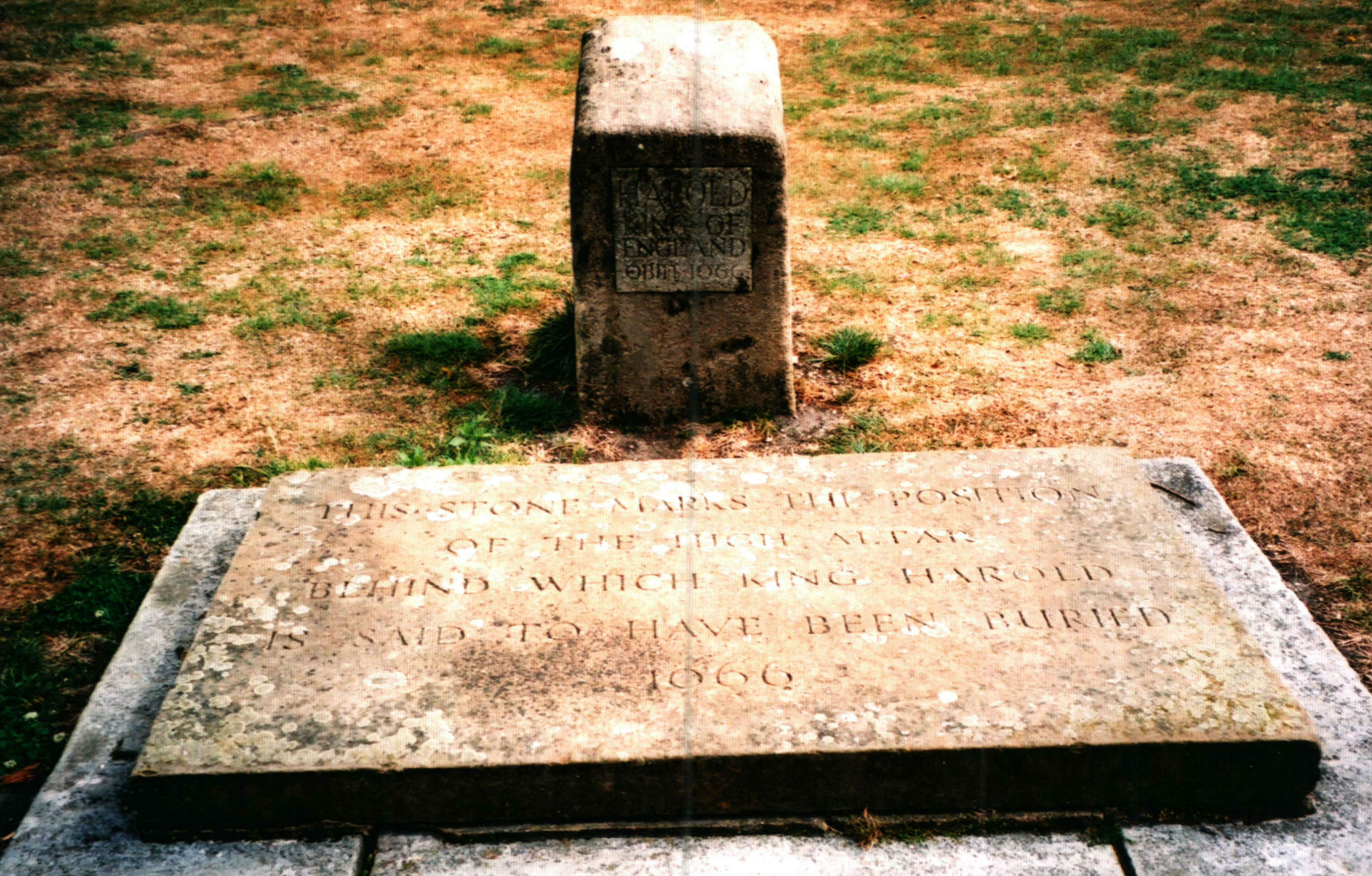
Above: Waltham Abbey.  Below: the slab marking the position of the original High Altar, behind which King Harold of England was said to have been buried after the Battle of Hastings in 1066.

Waltham Abbey High Altar Waltham Abbey King Harold

Posted in Saxons | Tagged , , | Leave a comment

Bosworth Field

King Richard iii          1482-1485

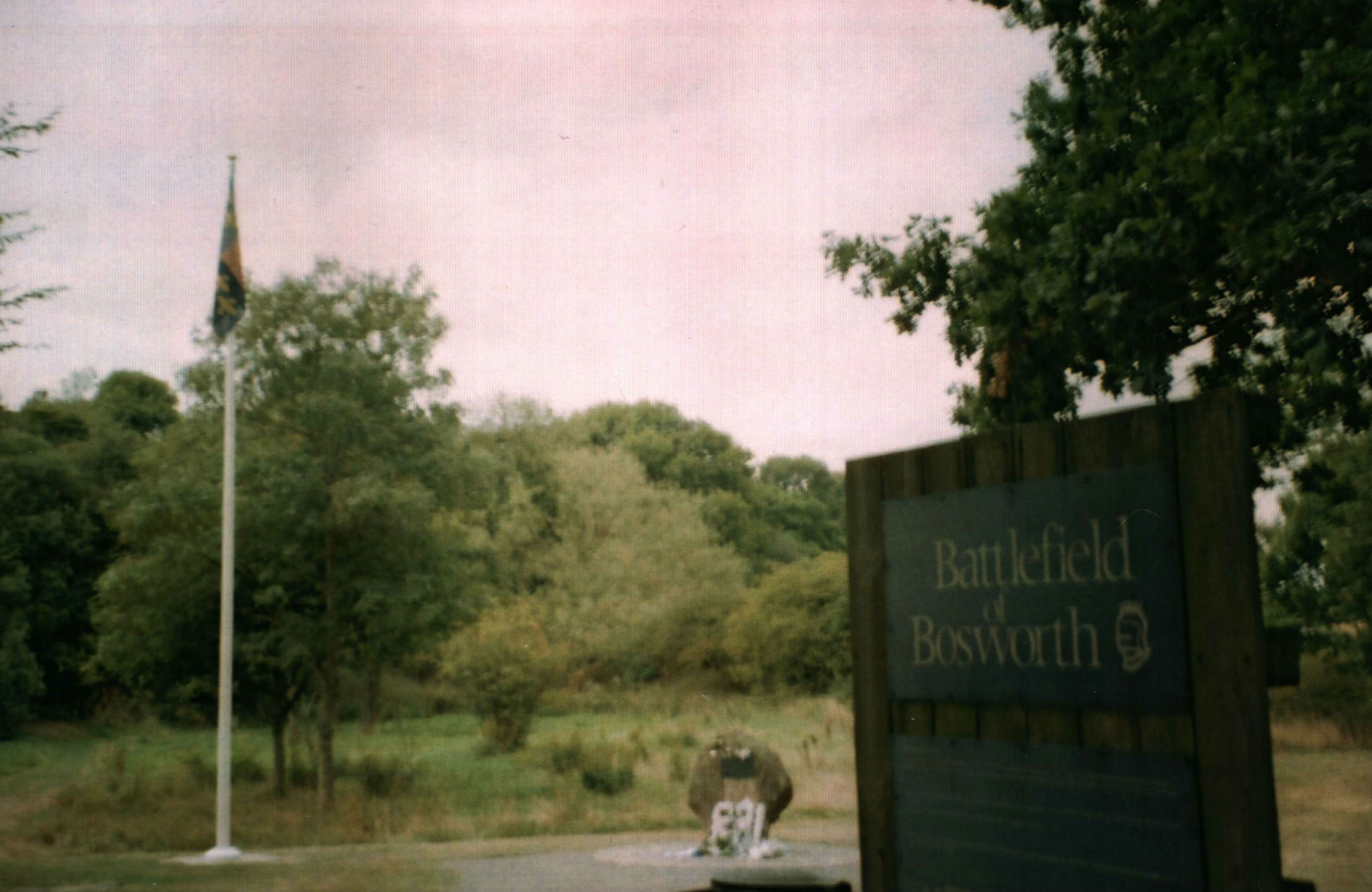
Bosworth   Left: Battlefield of Bosworth

After winning the Battle of Bosworth, Henry Tudor became King Henry vii. The memorial below reads ‘Richard the last Plantagenet King of England was slain here 22nd August 1485’. The flowers are those laid on the anniversary.

Bosworth Anniversary

The King’s naked body was thrown over the back of a horse and taken to Leicester for burial. Until quite recently (see below) it was believed that, at the Dissolution, his remains were exhumed and thrown into the nearby River Stour at Bow Bridge.

Bow Bridge

Recent discoveries concerning the battle site accept evidence that the battle was fought a little farther away than Bosworth Field. In addition, excavations as recent as August 2012, or later, of the car park covering remains of the church in which Richard iii was known to have been buried, actually located his whereabouts. Subsequently, it was accepted, supported by DNA evidence, that archaeologists had recovered Richard iii’s remains. These are now to be interred in Leicester Cathedral during March 2015.


Posted in House of Plantagenet | Tagged , | Leave a comment

Leicester Abbey

Cardinal Wolsey            1530

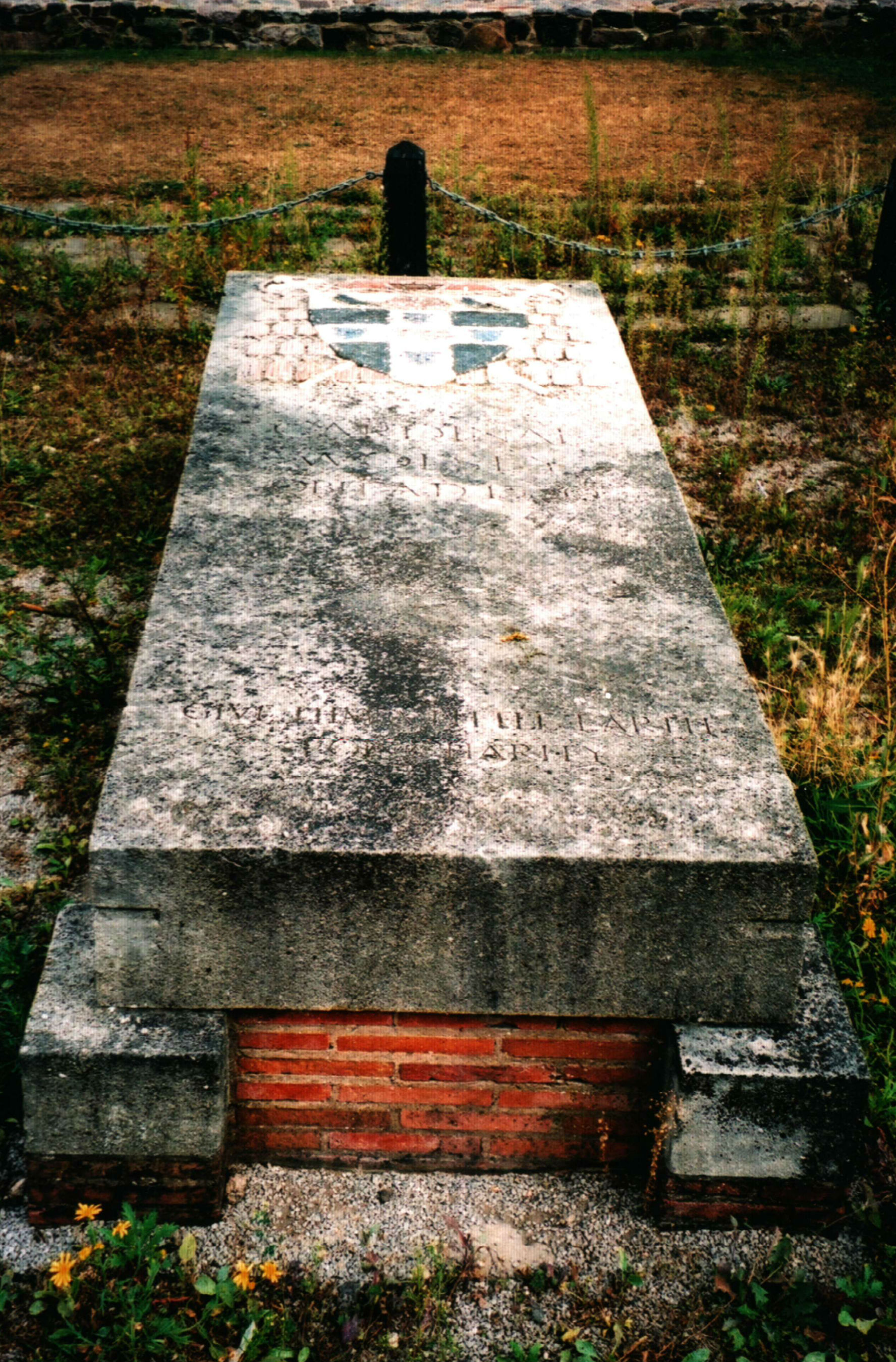
As Henry viii’s closest advisor, Cardinal Thomas Wolsey wielded great power and influence but fell from grace after failing to gain Papal approval for the King’s divorce from Katharine of Aragon. He died on 29th November 1530 at Leicester Abbey where he was buried in the Lady Chapel.

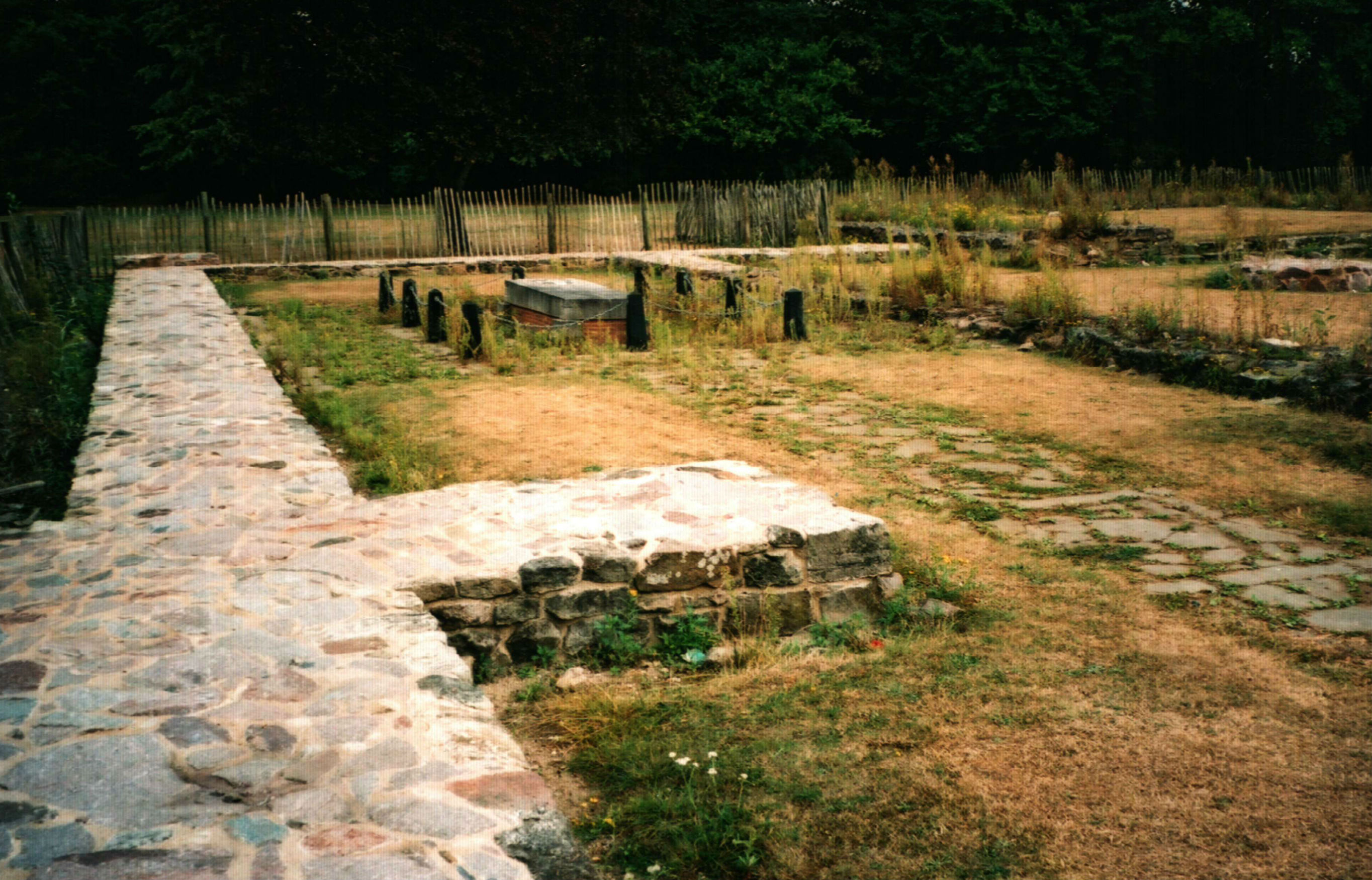
Below: Leicester Abbey Ruins.

Leicester Abbey

Below left: the Lady Chapel; below right: the resting place of Cardinal Wolsey

Lady Chapel      Cardinal Wolsey


Posted in Uncategorized | Tagged , | Leave a comment

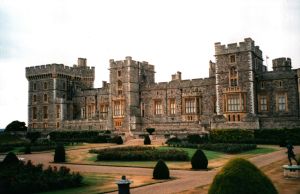
St George’s Chapel, Windsor

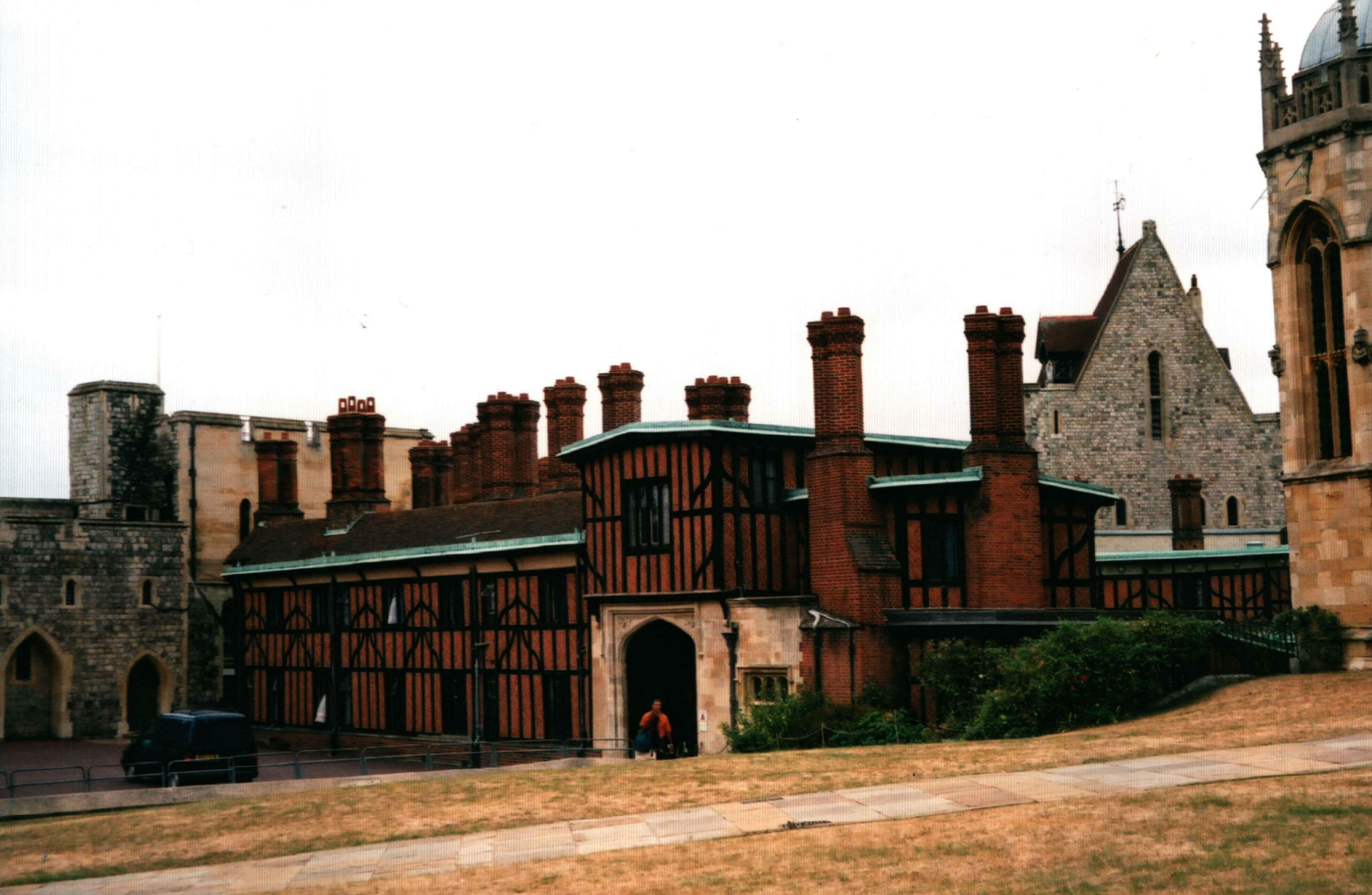
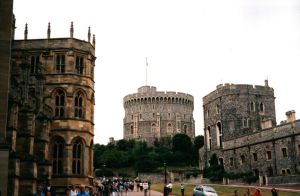
St George’s Chapel, Windsor                                                                                                         Henry vi                    1422-1461                                                                                                                                                   1471-1471                                                                                                   Edward iv                 1461-1470                                                                                                                                                   1471-1483                                                                                                             Henry viii                  1509-1547                                                                                                       Charles i                    1625-1649                                                                                                         George iii                   1760-1820                                                                                                 George iv                   1820-1830                                                                                                       William iv                 1830-1837                                                                                                           Edward vii                1901-1910                                                                                                   George v                    1910-1936                                                                                                   George vi                   1936-1952

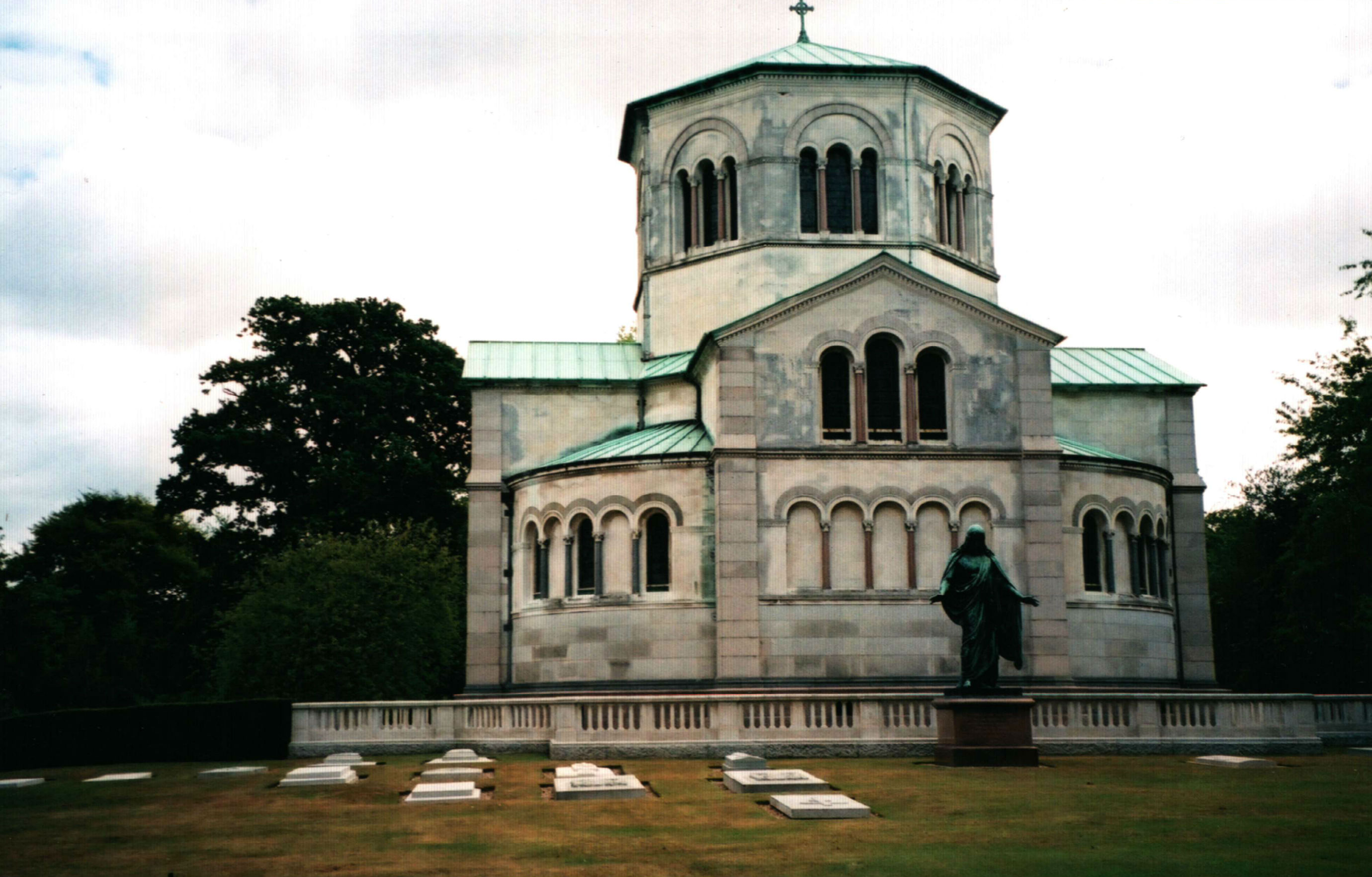
Frogmore Mausoleum                                                                                                                Victoria                      1837-1901

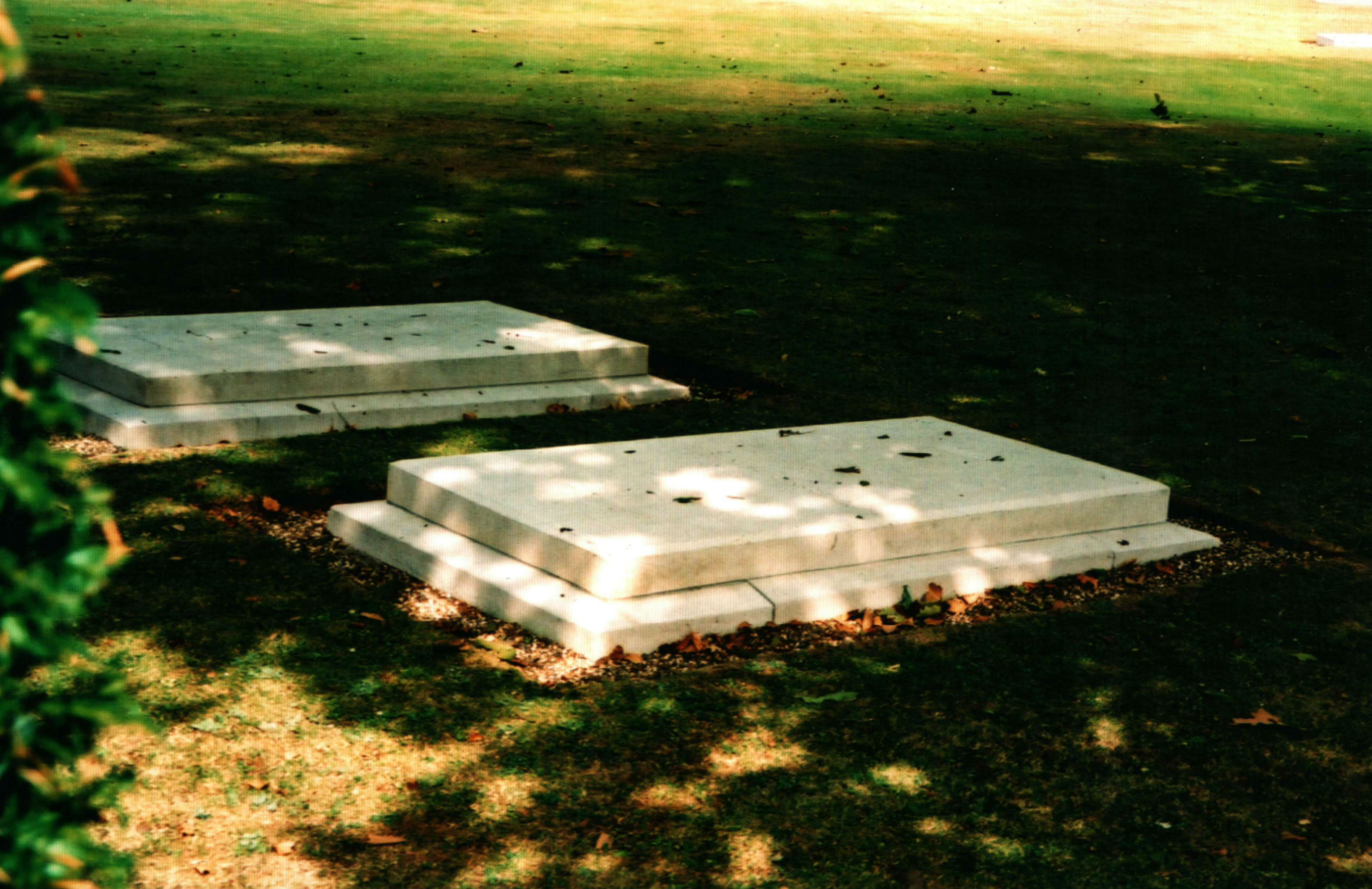
Frogmore Burial Ground                                                                                                            Edward viii               1937 Abdicated
Windsor Castle 1      Windsor Castle 2

Windsor Castle 3

Photography is forbidden in St George’s Chapel, so the best I can do to chart the resting place of Kings and Queens is to refer you to a plan of the building, which you can view by clicking on the link, and lead you on a tour of the relevant locations on the plan as follows: From bottom left:

5)     Tomb of King George v (1910-1936) and Queen Mary

6)     Tomb of King George vi (1936-1952) and now also, HM Queen                                                    Elizabeth the Queen Mother. In the same tomb are the ashes of                                                  HRH Princess Margaret.

8)     Tomb of King Edward iv (1461-1470 and 1471-1483) and his Queen,                                          Elizabeth Woodville. King Edward had the chapel built.

13)    The Royal Vault. Beneath a slab in the floor of the Choir is the opening to a                             large crypt into which Monarchs are lowered at their funeral. For many, it has been a           temporary resting place while their permanent tomb was being constructed. Among             those who still remain there are: King George iii (1760-1820), King George iv (1820-             1830), King William iv (1820-1837) and many other members of the Royal Family.

14)    The tombs of King Henry viii (1509-1547) and Queen Jane Seymour, and King                       Charles i (1625-1649)

22)    Tomb of King Henry vi (1422-1461 and 1470-1471)

23)    Tomb of King Edward vii (1901-1910) and Queen Alexandra.

I was unable to take my own photographs in St George’s Chapel, due to a policy of ‘no photography’ but as you will see from the links below, it is surprising what photographs can be obtained from other sources.

The tomb of King Edward vii (1901-1910) and Queen Alexandra.

The tomb of King George V (1910-1936) and Queen Mary.

Buried beneath the black marble slab are King George vi (1936-1952), Queen Elizabeth the Queen Mother and the ashes of Princess Margaret.

Frogmore

Above: The Royal Mausoleum at Frogmore and the royal burial ground. Again, although photography is forbidden inside the Mausoleum, the tomb and sarcophagus of Queen Victoria (1837-1901) lying on the left side of her husband and Consort, Prince Albert (1861) can be viewed by clicking on this link.

Below: the graves of King Edward viii (uncrowned, abdicated 1936 and re-titled thereafter ‘Duke of Windsor’) and his wife, Wallis Simpson.

Duke of Windsor

Posted in Kings & Queens of England | Tagged , , | Leave a comment

Buried Abroad

The culture, language and individual identity of the indigenous ‘Briton’ has long since been lost to invading races and the passage of time. It should not be surprising therefore, that the forces that gave rise to that, provided us with Monarchs whose hearts and souls were still steeped in their own native lands. For instance, Richard i (The Lionheart), of his ten-year reign, spent only one in England and never learned to speak English!

Understandably then, some were intent on being buried in the land of their birth rather than their adopted country. At least one – James ii – had little choice other than to live and die in France after being dethroned and exiled by Parliament in 1688. But I have stopped short of visiting their tombs due to their being desecrated and their remains scattered during the religious and civil wars of the 17th/18th centuries.

With the exception of George i, who died in Germany and is buried in a vault at his family’s castle in Herrenhausen near Hanover (not open to the public), nothing is left of the remaining English Monarchs buried in France save a thigh bone of William The Conqueror in his tomb at Caen.
Nevertheless, they constitute a vital part of the story and are accordingly included. They are:
William i (The Conqueror)   1066-1087   buried   Caen                  – France                               Henry ii                                     1154-1189    buried   Fontevrault      – France                           Richard i (Coeur de Lion)     1189-1199    buried   Fontevrault      – France                           James ii                                     1685-1688   buried  Paris                   – France                         George i                                     1714-1727    buried   Herrenhausen  – Germany

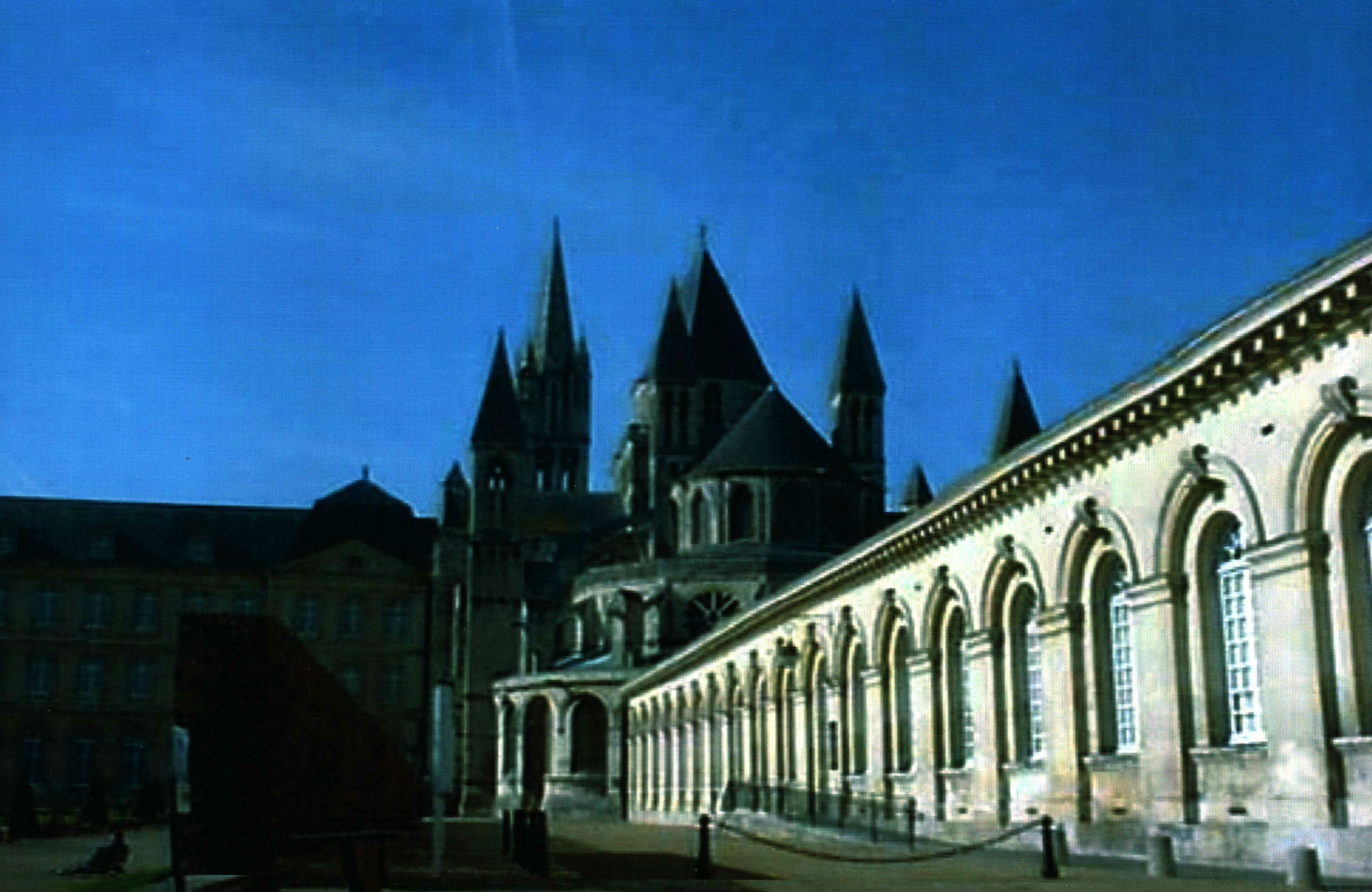
Abbey      Abbey Nave

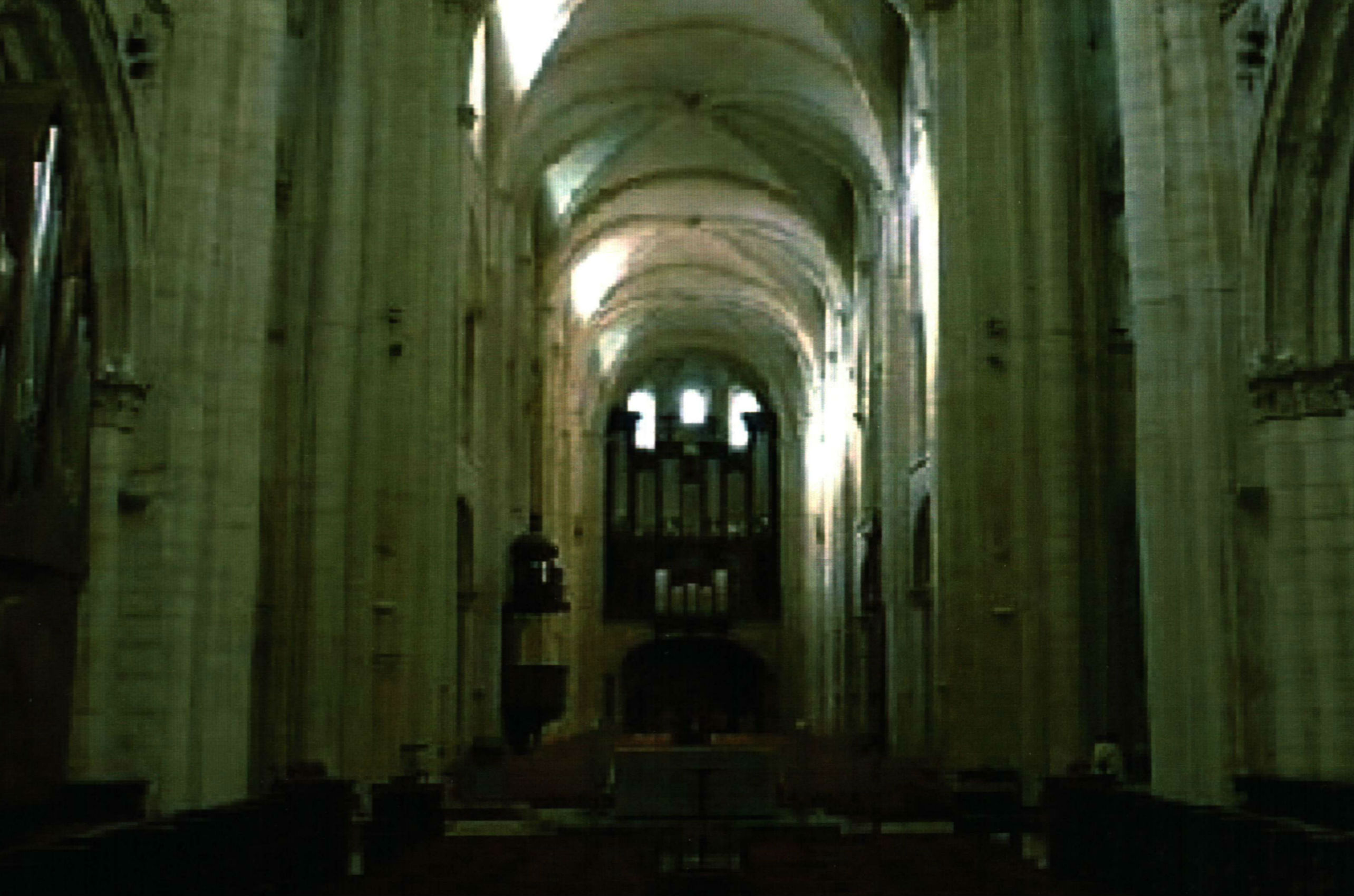
Above: St Stephen’s Abbey, Caen and a view of the Nave.

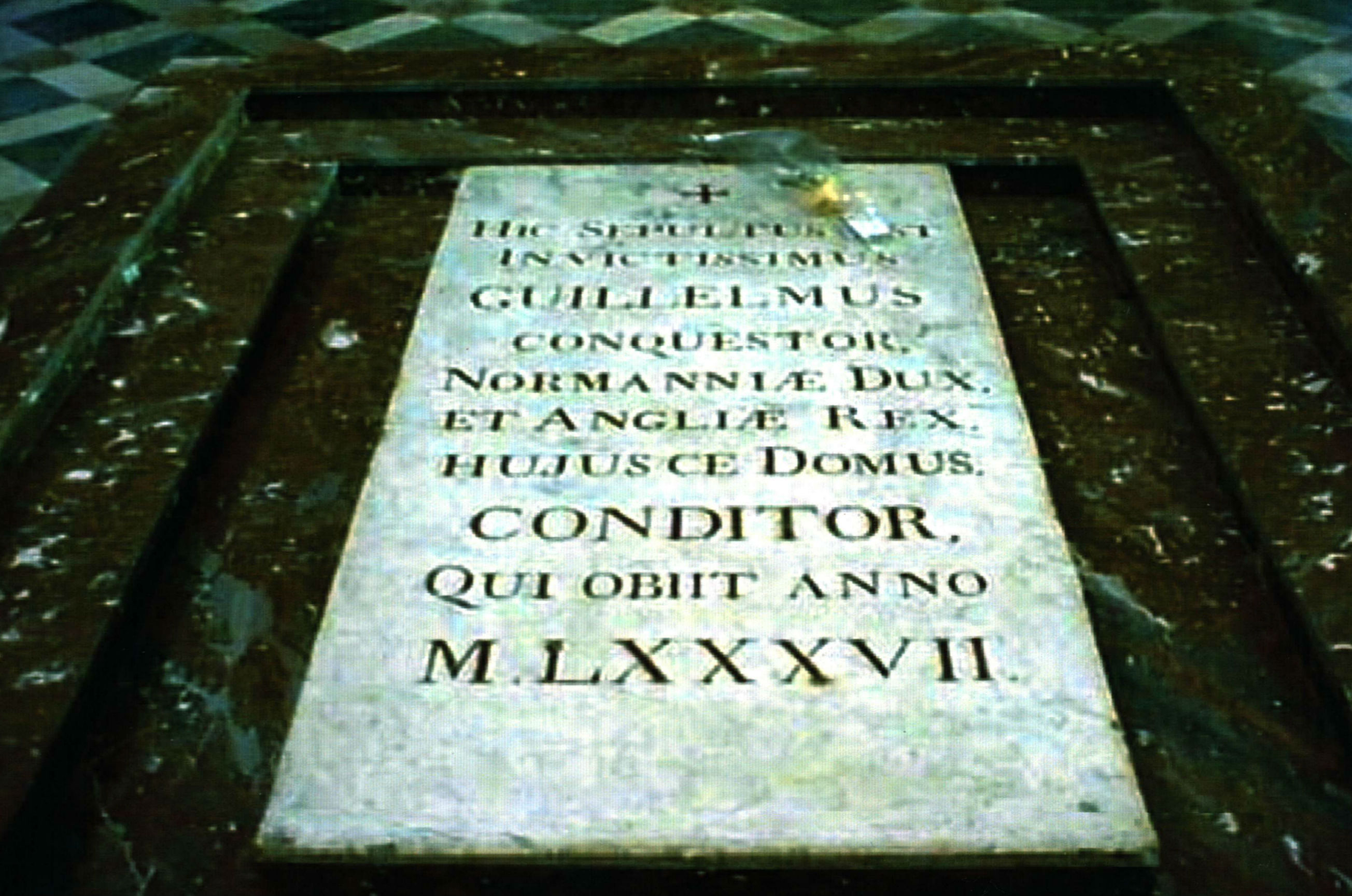
Below: the stone slab on the tomb of William the Conqueror which translated reads, ‘Here was buried the invincible William the Conqueror, Duke of Normandy, King of England, founder of this house who died in 1087’.

William the Conqueror

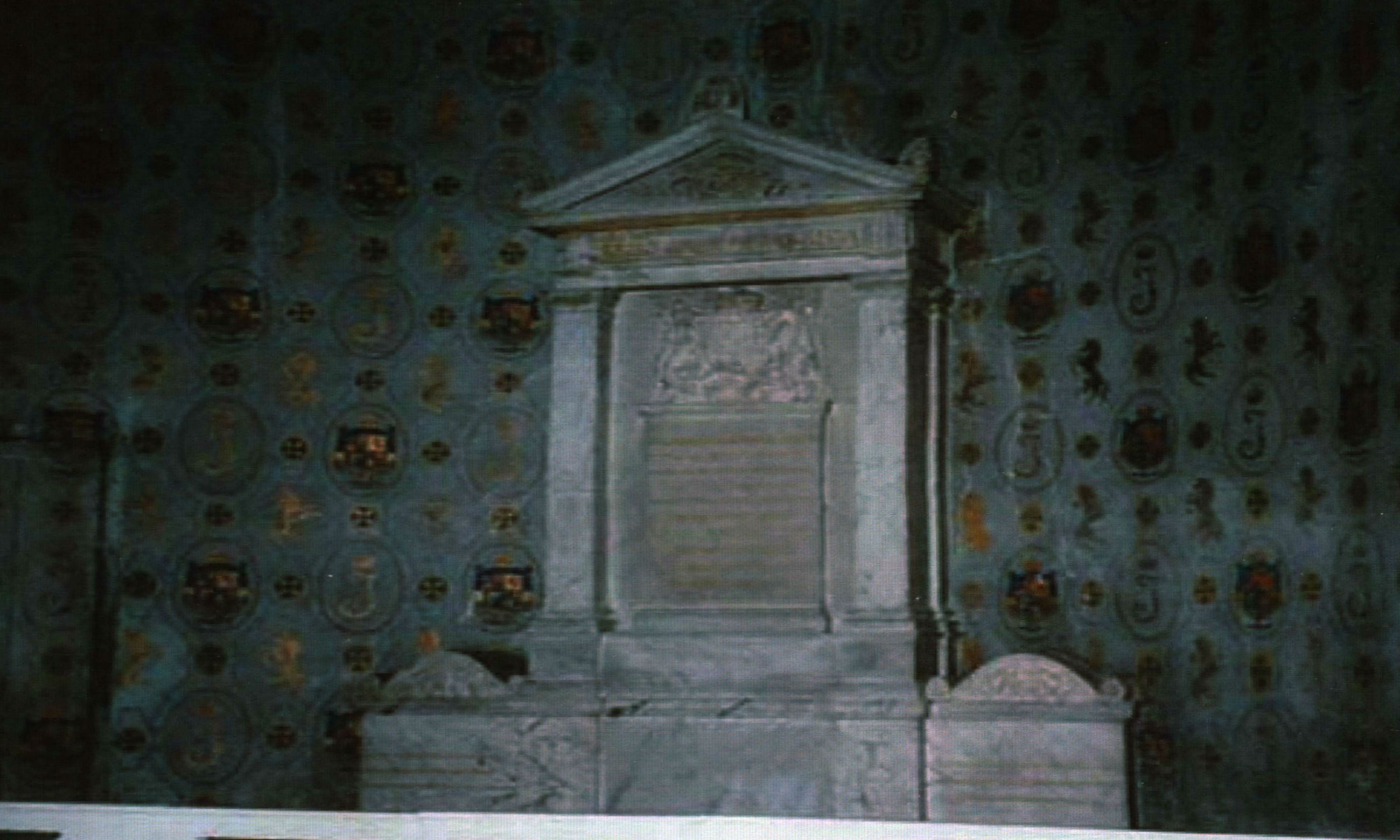
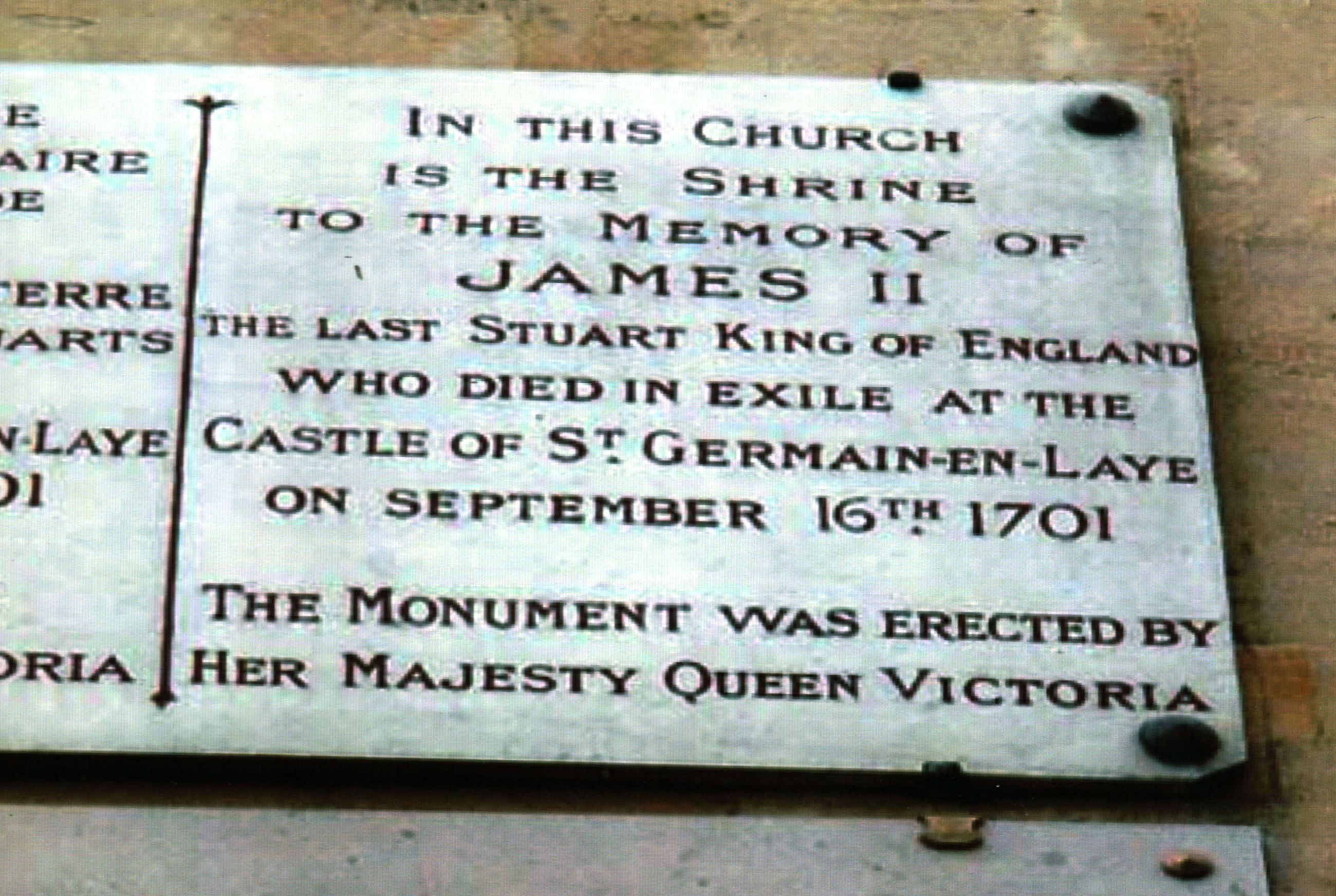
Below: the memorials to King James ii 1685-1688 who, after being deposed, died in exile in 1701. He is buried in St Germain-en-Laye, Paris.

King James II      King James

Below left: the tombs of Fontevrault Abbey of (at the back) King Henry ii, 1154-1189, with Queen Eleanor of Aquitaine on his right and, foreground, King Richard i (Coeur de Lion) 1189-1199 with Queen Berengaria on his right.

Fontevrault Abbey      Henry Eleanor

Above right: a closer view of King Henry’s and Queen Eleanor’s tombs.

Posted in House of Stuart, Kings & Queens of England | Tagged , , , , | Leave a comment

Those Lost To Time

Some will never be traced but it is interesting to remind ourselves of the reasons.

In the post-Roman and pre-Christian era the practice of burial varied. Indeed cremation was the norm until the late 6th and 7th centuries when the increasing influence of Christianity took hold. As there were few buildings of substance in which to be buried, Kings / Chieftains would often be buried in forts or ‘barrows’ close to a village or place of personal significance to them.  In  later Christian times, early Abbeys / Cathedrals were wooden structures and should a King be interred there, fire, warfare, weather and age would eventually bring about the demise of the building and uncertainty of the grave.

The dissolution of the monasteries led to royal remains being exhumed and thrown away together with a goodly number of saints and their shrines. Thomas Wriothesley, one of Henry viii’s Commissioners wrote to Thomas Cromwell in 1538 after the destruction of the Shrine of St Swithun in Winchester Cathedral saying, “which done, we intend both at Hyde (Hyde Abbey – the burial place of King Alfred) … to sweep away all the rotten bones that be called relics …”  A little over a hundred years later, Oliver Cromwell’s regime purged the Cathedrals and Abbeys of any last vestige of royal privilege in death, by despoiling what was left.

Unexpected ‘finds’ of missing royal remains, however close they may be to fitting the known facts, continue to be controversial. After discovering the remains of two young bodies in the Tower of London in 1674, it was understandably assumed they were those of the young Edward v (1483) and his brother Richard, Duke of York (the Princes in the Tower). They were subsequently interred in Westminster Abbey but confirmation of their identity continues to cause debate. A discovery in Shaftsbury Abbey in 1935 of what was assumed to be the remains of Edward the Martyr (979) was, as late as 1989 unresolved even after carbon dated verified their age. King Alfred’s last burial site at Hyde Abbey may now have been finally discovered but his alleged remains in St Bartholomew’s Churchyard continue to be contentious, and King Harold’s grave has to be weighed against a legend that he survived Hastings and lived as a hermit! To complete the example, Queen Ann Boleyn’s body is almost certainly in St Peter ad Vincula in the Tower where she was beheaded, but she is also claimed to be buried in the Boleyn Church at Salle, Norfolk, and her heart in two other churches!

Other known resting places are empty too: the tomb of Athelstan and in the case of Richard iii, his bones were tipped into the River Stour and his stone coffin used as a horse trough outside a tavern for decades.* Fortunately, the vast majority of our Kings and Queens are actually where they were laid to rest, affording visitors, like myself, an opportunity to pay our respects.

*See earlier section regarding recent discoveries concerning Richard iii.

Posted in Kings & Queens of England | Tagged , , , | Leave a comment